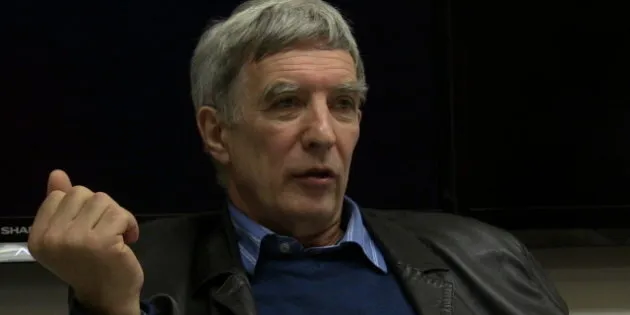
Canada Income Gap: Richard Wilkinson, Inequality Guru, Says Canada Risks Becoming 'Anti-Social,' Violent

The Huffington Post Canada  |  Posted: 05/02/2012 11:31 am Updated: 05/04/2012 12:20 pm

Canada risks becoming a more violent and anti-social place if it allows income inequality to worsen, one of the world’s leading experts on the subject says.

Richard Wilkinson, author of The Spirit Level: Why More Equal Societies Almost Always Do Better, told The Huffington Post Canada’s editorial board Thursday that Canada is bound to become a society where “people are more out for themselves” if differences between the rich and poor continue to grow.

“I expect if your income differences keep rising, as I think they have been since the early 1990s, you will become a more anti-social society, people will be more out for themselves,” Wilkinson, a retired professor of social epidemiology at the University of Nottingham in the U.K., said in response to a reader question.

He also said he expected Canada’s violent crime rate to become more comparable to the rate seen in the U.S. if inequality continues to grow.

The Huffington Post chose four of the best questions readers asked to put to Wilkinson. Read the complete Q&A below.

PHOTOS: COUNTRIES WITH THE WIDEST GAP BETWEEN RICH AND POOR

Question from reader Lorax 8: What is the end result for a society -- such as Canada's -- that continues to increase along the rich-poor divide? Can our economy or our society survive another one or two decades of this, and would it be recognizable as Canada?

I think there’s no doubt that … rising income differences do affect the whole social fabric of society. So I expect if your income differences keep rising -- as I think they have been since the early 1990s -- you will become a more anti-social society, people will be more out for themselves. And with that, if you get more unequal more rapidly than other countries, then your position in all sorts of league tables will fall. Instead of being much less violent than the United States, you might get more overlap. And similarly with health.

It’s an extraordinary picture. The U.S., one of the most unequal developed countries, has worse health, in terms of life expectancy, than any of the other developed countries. It has higher teenage birth rates, it has more people in prison, it has more violence, it has worse mental health. A whole raft of things are affected.

At the moment, Canada does much better than the United States. And it almost certainly is doing better because it’s more equal. And you must retain that.

Question from reader Heather Blackett: I see all around me an erosion and a devaluation of what I would regard as institutions of public trust and civic commons; libraries, parks, public spaces, public education and health care, community associations ... The very institutions that protect and promote social equality, mobility and inclusion. Do you believe that this is a one-way slide, or are there still opportunities for my generation to defend -- or create new -- institutions that value and promote equality?

I would say the causality has been primarily in the other direction. You’re losing all those kinds of provisions because income inequality develops an ideology that we have less to do with each other. There’s less reason why the better off should provide for others, [and less belief] that it’s the government’s job to provide these things for society. Growing inequality is about fending for yourself.

So I think the main effort must be in reducing the material differences.

Question from the editorial board: So in your view, the inequality comes first, then the attitudes of selfishness follow from it?

Yes.

It was [Alexis] de Tocqueville, who lived in the States in the 1830s, who said we don’t empathize with each other across material differences. ‘It’s not my job to look after these people.’ We make judgments of each other based on social status, so the prejudiced view of the poor has always been that they’re lazy and stupid, and the rich are brilliant, and growing inequality increases all those [perceptions].

De Tocqueville talked about how the French landed aristocracy empathized with each other enormously over their trials and tribulations, but couldn’t understand what the peasants were fussing about. And similarly with white America, he talked about the extraordinarily cohesive nature of white society, but no empathy with slaves at all. And even in my childhood the most common justification for racism was people saying, ‘Well they just don’t live like us, do they.’

What the question is pointing out is the policy that’s followed in the wake of growing differences, I think. But it has also been affected by an international ideology -- the neoliberal economics [of Reagan and Thatcher] that swept through the developed world, one country after another. Canada caught the disease a little later than others, but Canada still caught it.

Question from reader Djimcintosh: The focus of the past 50 years on computerization and automation has increased productivity on average 2.1 per cent each year since 1961 (StatsCan). This means a 20 per cent improvement every 10 years. We should be living in a Utopian society, except we reduced employment instead. Higher wages and profits for the rich, and a pink slip for the poor. Can Mr. Wilkinson address the role of productivity improvements in establishing the current income inequality? How can we share future productivity improvements across society?

I think that’s a very important question, particularly as we become aware of the environmental limits to economic growth.

The New Economics Foundation in London has argued that we need to take the benefits of increased productivity out not in terms of higher levels of consumerism and so on, but in terms of more leisure, more time for friends, family and community.

I don’t know how they calculated it, but they said we should be moving toward a 21-hour work week.

income inequality chart

Source: Wilkinson & Pickett

This [chart] shows life expectancy in relation to national income per person. What it shows is rapid improvements in life expectancy in the early stages of economic development, and then it levels off.

And the interesting thing is that if you show measures of well being or measures of happiness against national income, you get very much the same shape -- rapid improvements at the beginning of economic development, and then it levels off.

That is a curve of diminishing returns to economic growth. Economic growth is what has transformed the real quality of our lives in the past, but it’s largely done its work now. ... We still do have improvements in life expectancy, but unrelated to economic growth.

So what that’s really telling us, it’s important for poorer countries to have rises in living standards, but for us in the rich world, to have more and more of everything makes less and less difference. So instead of using our gains in productivity to raise material standards through consumerism, status competition and so on-- there’s pretty good evidence that that’s a zero sum game.

And so we do need to take out gains in productivity in terms of more leisure. It’s time for friends, family and community. That’s particularly important to recognize when faced with the environmental consequences of continued [high] levels of consumption.

Question from reader Shaun L: I would like to ask Richard Wilkinson: In his expert opinion, do the policies of the Conservative government (of Canada) purposely target the poor and middle class in order to keep them "occupied" and “in check" so they do not have the physical or mental energy to oppose the aristocracy we live in?

I don’t think one should [promote] conspiracy theories about what’s going on. It’s more a reflection of people’s ideas of how [things] work.

There is I think, a real conflict of ideologies, which I think stems at some very fundamental level from our view, our sense of human nature -- how fundamentally social we think people are, or whether we think we’re basically materially self interested.

The truth is that we change in different environments. What inequality does is make us more [inclined] to self interest, but actually that consumerism that appears to be material self interest, is not a relationship between us and things, it’s a very alien form of communication. It’s actually an expression of how deeply social we are, because actually what we are using our money for is to communicate our status and success and so on, and to give a good account of ourselves to others. So actually it’s an indication of how social we are, but it’s a very alien way of expressing that.

And the alternative view is that what we’re really motivated by is feeling valued by friends and society more widely. In a way everything to do with the effects of inequality can be expressed in terms of whether we feel valued or not. At the big multinationals, the most junior employees are paid one third or one quarter of one per cent of the CEOs. There’s no more powerful way of telling people that you’re almost worthless.

And with that, of course, goes the feeling that some peope are extremely valuable and others don’t matter at all.

[Politically] I think there will always be a hard core of opposition [to these ideas]. But in a democracy that shouldn’t be too much of a problem.

I think what is a problem is where you get money being too entrenched in politics. l really think it’s crucially important to keep money out of politics, have limitations on electoral spending, sizable donations from companies or rich individuals. It’s very damaging to the political process and democracy itself.

I think the media are also crucial. For democracy to function you’ve got to have good information. And I think we shouldn’t have too much of the media controlled by any one person or organization. It’s got to be diverse.

If you could ask one of the world’s most esteemed income inequality gurus one question, what would it be?

British scholar Richard Wilkinson, a pioneering expert in the field of social inequality and author of the best-selling book The Spirit Level: Why More Equal Societies Almost Always Do Better, will join The Huffington Post Canada for an editorial board meeting at 11 a.m. ET on Thursday, May 3. We will present him with a selection of your best questions, as chosen by HuffPost editors.

Leave your questions now in the comments section, and check back later to see Wilkinson’s answers.

Here are a few questions to get you going:

Why should Canadians care about growing income inequality?

Does income inequality affect both rich and poor people?

How does income inequality relate to obesity?

Are there any solutions to the growing rich-poor divide?

When Richard Wilkinson talks about income inequality, people listen.

Over the past four decades, he has studied the social implications of high levels of inequality -- and has uncovered some disquieting connections between the rich-poor divide and our well-being. A retired professor of social epidemiology at the University of Nottingham, and co-founder of the U.K.-based think tank Equality Trust, Wilkinson has found that more unequal societies also have higher rates of everything from homicides and imprisonment to obesity and teenage births.

It’s a message that Canadians should take to heart. Over the past 25 years, the poorest Canadians have seen their real incomes decline even as the wealthiest have made progress. An increasingly small share of people are taking up an increasingly large share of Canada’s impressive economic growth. As we have reported in our Mind The Gap series, in Canada the growing rich-poor divide is already having all kinds of unexpected implications, including making us more unhealthy and driving up house prices for everyone.

At the moment, Canada’s income divide still puts us in the middle of the pack among developing countries. But as debate about this deepening trend heats up, we are opening up the discussion to you.

Wilkinson will be meeting with The Huffington Post Canada’s editorial board on Thursday, May 3, at 11 a.m. ET.

Leave questions for the inequality guru now in the comments section, and check back later to see Wilkinson’s answers.

COUNTRIES WITH THE WIDEST GAP BETWEEN RICH AND POOR

Loading Slideshow...
  • 10. New Zealand

    > Gini coefficient: 0.330<br> > Change in income inequality: +21.8%<br> > Employment rate: 72.3% (6th highest)<br> > Change in income of the rich: +2.5% per year<br> > Change in income of the poor: +1.1% per year New Zealand performs well by a number of economic indicators, including employment, where it ranks sixth highest out of the 27 OECD countries in the study. Income in New Zealand has increased across the board since the 1980s, but the percentage annual increase among the top decile was more than twice as great as among the bottom decile. Among OECD nations, capital income in New Zealand as a percentage of total household income grew the most for the richest group and decreased substantially for the poorest group.<br> <a href="http://247wallst.com/2011/12/06/countries-with-biggest-spread-between-rich-and-poor/3/" target="_hplink">Read the entire post at 24/7 Wall St. </a>

  • 9. Australia

    > Gini coefficient: 0.336<br> > Change in income inequality: +8.7%<br> > Employment rate: 72.4% (5th highest)<br> > Change in income of the rich: +4.5% per year<br> > Change in income of the poor: +3% per year The difference in the annual increase in income between the richest and the poorest in Australia from the mid-1980s to 2008 is one of the largest among all countries in the study. The average annual change in income for the bottom decile was 3%, compared with the top decile's 4.5%. This caused the Gini coefficient to increase 8.7% over those years. Australia has one of the highest minimum wages, as a percentage of average wages, of all the G-20 countries. The country also has a fairly high employment rate.<br> <a href="http://247wallst.com/2011/12/06/countries-with-biggest-spread-between-rich-and-poor/3/" target="_hplink">Read the entire post at 24/7 Wall St. </a>

  • 8. Italy

    > Gini coefficient: 0.337<br> > Change in income inequality: +9.0%<br> > Employment rate: 56.9% (3rd lowest)<br> > Change in income of the rich: +1.1% per year<br> > Change in income of the poor: +0.2% per year In Italy, income inequality increased 9% between 1985 and 2008. According to the OECD, earnings for the wealthiest 10% increased an average of 1.1% each year, while earnings for the poorest 10% grew just 0.2% annually. Italy has the third-lowest employment rate among the 27 nations in the study, with just 56.9% of working-age adults holding jobs in 2008. Since 1985, unemployment benefits declined by more than 50% to one of the lowest recipient rates in the OECD.<br> <a href="http://247wallst.com/2011/12/06/countries-with-biggest-spread-between-rich-and-poor/3/" target="_hplink">Read the entire post at 24/7 Wall St. </a>

  • 7. United Kingdom

    > Gini coefficient: 0.345<br> > Change in income inequality: +7.9%<br> > Employment rate: 70.3% (10th highest)<br> > Change in income of the rich: +2.5% per year<br> > Change in income of the poor: +0.9% per year The UK had one of the biggest increases in the income gap between the wealthy and the poor over the past two and a half decades. On average, the income of the bottom 10% increased 0.9%, while income for the top 10% grew 2.5% per year. After Israel and Australia, the UK had the third-largest difference between the top decile's annual income increase and the bottom decile's increase. The income ratio of the wealthiest citizens to the poorest citizens is 10 to one.<br> <a href="http://247wallst.com/2011/12/06/countries-with-biggest-spread-between-rich-and-poor/3/" target="_hplink">Read the entire post at 24/7 Wall St. </a>

  • 6. Portugal

    > Gini coefficient: 0.353<br> > Change in income inequality: n/a<br> > Employment rate: 65.6% (14th highest)<br> > Change in income of the rich: +1.1% per year<br> > Change in income of the poor: +3.6% per year Despite its high Gini coefficient, Portugal's income inequality has been improving. From the mid-1980s to the late 2000s, the incomes of the country's poorest increased an average 3.6% each year. The incomes of the richest grew only 1.1% annually. The country has increased its efforts to redistribute income since the mid-1980s, such as through benefits for the unemployed.<br> <a href="http://247wallst.com/2011/12/06/countries-with-biggest-spread-between-rich-and-poor/3/" target="_hplink">Read the entire post at 24/7 Wall St. </a>

  • 5. Israel

    > Gini coefficient: 0.371<br> > Change in income inequality: +13.8%<br> > Employment rate: 60.2% (7th lowest)<br> > Change in income of the rich: +2.4% per year<br> > Change in income of the poor: -1.1% per year In Israel, the average income of the bottom 10% actually decreased between 1985 and 2008. On average, income of the top 10% increased 2.4% per year. During the same period, income of the poorest 10% declined 1.1% each year -- the worst rate of decline among the 27 nations studied. Only one other country, Japan, saw its bottom decile's income fall as well. According to the OECD, the top 10% of Israel's residents make 14 times more than the poorest 10%.<br> <a href="http://247wallst.com/2011/12/06/countries-with-biggest-spread-between-rich-and-poor/3/" target="_hplink">Read the entire post at 24/7 Wall St. </a>

  • 4. United States

    > Gini coefficient: 0.378<br> > Change in income inequality: +12.1%<br> > Employment rate: 66.7% (13th highest)<br> > Change in income of the rich: +1.9% per year<br> > Change in income of the poor: +0.5% per year Inequality in the United States increased significantly from 1985 to 2008, putting it in the fourth-worst spot in the study. As with many other countries in which income inequality has increased, average income has gone up across all income groups since the mid-1980s, but not equally. The income of the wealthiest 10% has greatly outpaced the poorest 10%. The share enjoyed by the top 0.1% in total pretax income quadrupled in the 30 years to 2008.<br> <a href="http://247wallst.com/2011/12/06/countries-with-biggest-spread-between-rich-and-poor/3/" target="_hplink">Read the entire post at 24/7 Wall St. </a>

  • 3. Turkey

    > Gini coefficient: 0.409<br> > Change in income inequality: -5.8%<br> > Employment rate: 46.3% (the lowest)<br> > Change in income of the rich: +0.1% per year<br> > Change in income of the poor: +0.8% per year Turkey was one of the few OECD countries to experience a narrowing of the gap between rich and poor, with income inequality improving 5.8% between 1985 and 2008. However, it still has the third-highest income inequality among the countries in this study. Part of Turkey's problem is a relatively low number of government programs to aid the poorest citizens. The average government social expenditure among OECD nations is close to 20% of GDP, while it spends just above 10% -- the third-lowest percentage. The wealthiest 10% of Turkey's residents make 14 times more, on average, than the poorest 10%.<br> <a href="http://247wallst.com/2011/12/06/countries-with-biggest-spread-between-rich-and-poor/3/" target="_hplink">Read the entire post at 24/7 Wall St. </a>

  • 2. Mexico

    > Gini coefficient: 0.476<br> > Change in income inequality: +5.1%<br> > Employment rate: 60.4% (8th lowest)<br> > Change in income of the rich: +1.7% per year<br> > Change in income of the poor: +0.8% per year Mexico has one of the highest rates of income inequality. Among all OECD countries, Mexico has the lowest amount of public social expenditure as a percentage of GDP. It also has the lowest unemployment benefit recipient rates. Finally, the country has the lowest minimum wages as a percentage of average wages.<br> <a href="http://247wallst.com/2011/12/06/countries-with-biggest-spread-between-rich-and-poor/3/" target="_hplink">Read the entire post at 24/7 Wall St. </a>

  • 1. Chile

    > Gini coefficient: 0.494<br> > Change in income inequality: n/a<br> > Employment rate: 59.3% (4th lowest)<br> > Change in income of the rich: +1.2% per year<br> > Change in income of the poor: +2.4% per year Chile is one of the few countries where the income of the poor increased at a higher annual rate than the income of the wealthy, 2.4% to 1.2%. Nevertheless, the South American nation has the worst income inequality among the 27 OECD nations examined. Chile has a particularly high rate of self-employed individuals, primarily because of its large farming class. The income ratio of the top 10% to the bottom 10% is 27 to one.<br> <a href="http://247wallst.com/2011/12/06/countries-with-biggest-spread-between-rich-and-poor/3/" target="_hplink">Read the entire post at 24/7 Wall St. </a>

FOLLOW CANADA BUSINESS

Canada risks becoming a more violent and anti-social place if it allows income inequality to worsen, one of the world’s leading experts on the subject says. Richard Wilkinson, author of The Spiri...
 
 
  • Comments
  • 181
  • Pending Comments
  • 0
  • View FAQ
Post Comment Preview Comment
To reply to a Comment: Click "Reply" at the bottom of the comment; after being approved your comment will appear directly underneath the comment you replied to.
View All
Favorites
Recency  | 
Popularity
Page: 1 2 3  Next ›  Last »  (3 total)
photo
Opus Fideo
Atheist. Social Democrat. Canadian.
04:36 PM on 05/14/2012
The more Harper tries to turn us into the US, the more violence we will have.
photo
HUFFPOST SUPER USER
Warren Yuill
Jesus Built My Hot-Rod
07:02 PM on 05/04/2012
Finaly a chance to fit in.
HUFFPOST SUPER USER
spinnerator
05:41 PM on 05/04/2012
What we couldn't figure that out from reading the news? Or the comments on blogs like this one?
04:22 PM on 05/14/2012
THANK you! Honestly; an "inequality expert"? Was "Common Sense Consultant" taken?
10:53 AM on 05/04/2012
In Quebec presently we're in the midst of a huge student movement and strike against tuition increases. I would imagine you believe that access to education goes along with social mobility and therefore a more equal income distribution in society. How would you make the argument to the greater population against tuition increases and towards free access to higher education?
photo
HUFFPOST SUPER USER
Dale Chan
Hope is both panacea and poison.
02:58 AM on 05/04/2012
Risks becoming?
paintitblacker
shit happens life goes on
12:38 AM on 05/04/2012
politicians like gordon cambell ,once in power he rolled back the minimum wage from 8 to 6 dollars per hour gave massive tax breaks to corporations and allowed select friends to build their own power plants called run of the river ,sold public assets tore up labour agreements ,the list is longer , other premiers have done the same things and now the prime minister is acting in the same reckless manner. this tells me ,they only care about one thing ,and that is themselves . why should Canadians care ,30 years ago the middle class donated to the food bank, now they can't get by without one, Obesity,super size me ,fast food ,and trans fats. the effect between the classes, whenever a billionaire looses 20 million 20 thousand of us lose a thousand yet the role is never reversed,when they make massive profits ,we need to stop being held accountable for their mistakes. when bankers are making billions and getting "liquidity" bailouts they still get multi million bonus's. The 1 % would do well to realize they are out numbered ,badly , and people are not inclined to listen to much more B.S.
This comment has been removed.
photo
HUFFPOST SUPER USER
OH canada
09:40 PM on 05/03/2012
This is all about corporate greed that translates to poor/expensive education/decline in jobs to increase profit etc etc. i could go on for hours but it is time people took a stand. since the middle class is the most affected why not cut their spending in the economy and see how well that goes over. but instead, they run and spend their hard end money in meaningless things to try to look like the upper class
photo
HUFFPOST SUPER USER
SayBlade
This micro bio intentionally left blank.
10:30 PM on 05/03/2012
Fanning you!
04:29 PM on 05/14/2012
To be fair though, that is their right, is it not? I agree that we (and I include myself) spend money on things that are certainly not necessities - not always to look like the upper class, but because we simply want those things. But I see nothing wrong with that when done with proper consideration toward our own personal budgets.

It's when people opt to overextend themselves that the trouble comes in. And while that is indeed made easier by the corporations out there, people are responsible for the decisions they make.
08:27 PM on 05/03/2012
The gap exists and grows daily.Its not just about education.The recent closure of the Caterpillar plant in London was about corporate greed. Workers told to take a 50% cut in compensation while the Ceo takes a hefty raise.Company balance sheet never looked better.Whats hard to understand here?
08:35 PM on 05/03/2012
Let's pretend you are the CEO of CAT and you set your salary at $75,000 per year because you want to help close the income gap.

You sell yellow machines for $250,000.

You can have your "friends" at the union build them for $200,000, or you can build them elsewhere for $130,000. What do you think your shareholders expect you to do?
photo
HUFFPOST SUPER USER
SayBlade
This micro bio intentionally left blank.
10:33 PM on 05/03/2012
When too many corporations and businesses do this, they will eventually run low on customers who can afford their goods and services because wages are dropping.
This user has chosen to opt out of the Badges program
MJinCanada
Safe from zombies until my 2nd cup of coffee
11:47 PM on 05/03/2012
But that's just one aspect of one company. What about the hundreds of other businesses that the workers who are making less or have no jobs won't be patronizing? The grocery store, bakery, plumbers and so on in my neighbourhood are not going to get any customers from India or Myanmar. Nor are folks in India and Myanmar paying taxes to support infrastructure and health care here.
08:23 PM on 05/03/2012
I know the socialists who run this site blame everything on the rich and the PM. I think the Occupy movement showed that certain people feel entitled to be given other peoples wealth through distribution - which is clearly wrong. Organized labour tells us that a baggage carrier working at the airport should have an hourly compensation package valued at $63 hour - which is clearly wrong.

Maybe the shrinking middle class, to which I am part of, need to look in the mirror and upgrade our education, work harder, seek better jobs, question the use of our taxes by government and take responsibility for our own destiny.

I am where I am in life because of me, not because of the rich and the Prime Minister.
10:20 PM on 05/03/2012
Next time you see someone that doesn't quite measure up to your standards , ask yourself this question . Would I be in similar circumstances had my life been started and was handed the same situations that this persons had . An accident, a job loss, a loss of a loved one , a illness, maybe your spouse falls ill and you need to tend to them . There are so many variables . Please don't judge others with personal arrogance untill you have tasted their demise .You are not where you are just because of yourself . Hopefully someday you will realize this and become a better person .
11:08 PM on 05/03/2012
When my Mom was diagnosed with cancer and given nine months to live, I balanced what work I could do with caring for her. I took a hit in pay and spent lots of time, money and emotion visiting her and providing care.

Unlike 1View, I didn't blame others or rely on some government handout.

Maybe look in the mirror 1View and consider other views.
photo
HUFFPOST SUPER USER
SayBlade
This micro bio intentionally left blank.
10:37 PM on 05/03/2012
Higher education, hard work and questioning the government are no absolute guarantee of a bright financial future. However, birth circumstances can make a difference.
11:11 PM on 05/03/2012
Yeah my ideas are within my control... I only wish I was born into a family with a supreme court judge as my dad. Ah, I'll stick with what I can control... I'll let others blame the rich and PM for being losers.
HUFFPOST SUPER USER
coutnac
08:15 PM on 05/03/2012
COME ON WHAT DID I SAY ?
HUFFPOST SUPER USER
coutnac
08:14 PM on 05/03/2012
HUFF, POST THINGS ARE NOT AS BAD AS IN THE US BECAUSE WE HAVE GOOD HEALTHCARE .
photo
HUFFPOST SUPER USER
SayBlade
This micro bio intentionally left blank.
10:37 PM on 05/03/2012
It is a bit of a cushion. We are in for a rough ride and that cushion will continue to get thinner.
photo
HUFFPOST SUPER USER
cwebster
predominantly exasperated
01:14 AM on 05/04/2012
For now. Keep an eye on Harper...he wants two-tier.
photo
HUFFPOST SUPER USER
Rob Vann
Hope for the best,Plan for the worst,Take what cms
07:33 PM on 05/03/2012
The growing gap in income inequality and the trend you perceive in the lower and middle class becoming more anti-social and possibly violent may be true in the distant future but in the near term the exact opposite seems to be happening. I see more interest in cooperation at the community level and the development of local support systems. I see more co-operative businesses starting. People are both creative and resilient and by their nature work together for the collective good.

I also see a growing level of collective discontent with our rising Gini and the collective anger against those at the top. Civil unrest will continue to evolve the Wall Street Occupy Movement or inspire more radical and perhaps more violent movements but these will be acting against the state or corporations representing the power elite.
08:16 PM on 05/03/2012
This is an interesting observation, and one that holds true to my experience. I have never been in such poor shape financially as I am right now, and I am finding myself more involved in local community initiatives that pull power away from the controlling corporate bodies and restore it to the community. But I think that response comes from an understanding (because I am educated) of what the root causes of our social decline are and how to effectively counteract those forces. If you do not understand the causes and conditions of your economic and social oppression, you are far more likely to remain a victim to them, and react in largely unconscious ways to your oppression. So the growing trend towards cooperation and social beneficence is, as far as I can see, a response by the more educated, oppressed members of society. Within a larger, less educated public (such as in the US), you see people responding to their oppression in far more reactionary, unconscious ways, because they lack the understanding and, hence, the language in which to effectively frame their experiences. That is, of course, why the Occupy movement is so essential to our evolution and, hopefully, our eventual freedom.
photo
HUFFPOST SUPER USER
Rob Vann
Hope for the best,Plan for the worst,Take what cms
09:28 PM on 05/03/2012
One thing overlooked about the Occupy or any other movement for that matter is that people suddenly get very serious about learning. The knowledge gap between those with a formal education and those without shrinks very quickly when there is a common interest.

Today people have many advantages over those from the 30's or even occupied Europe during the war in getting access to real information as long as they are willing to look. The rejection of Mainstream news by many under thirty is a definitely a good beginning.
photo
HUFFPOST SUPER USER
4evercanadian
Still my guitar gently weeps
09:51 PM on 05/03/2012
Agreed, fanned/faved. I think that the important cornerstone to this (which both you and Rob have pointed out) is education. When I was growing up post secondary education was pretty accessible. It is becoming less and less so now, but I think it's something that society really needs to push on. Of course, the 1% don't want an educated underclass, since it potentially undermines their position.
07:32 PM on 05/03/2012
Sadly its already happening pal. Just live in any big city. The middle class see it and the poor see it, it's just the rich, privileged and wealthy who are always late to see it. Just like in France they were blind or closed their eyes until the guillotine started falling. Lets hope it doesn't get to that here.
07:30 PM on 05/03/2012
So who do we leave it to redistribute all the wealth ? Oh the Government right! I thought most people here hate Harper and you want to leave it to him to redistribute wealth. Oh right but the NDP have the solution......