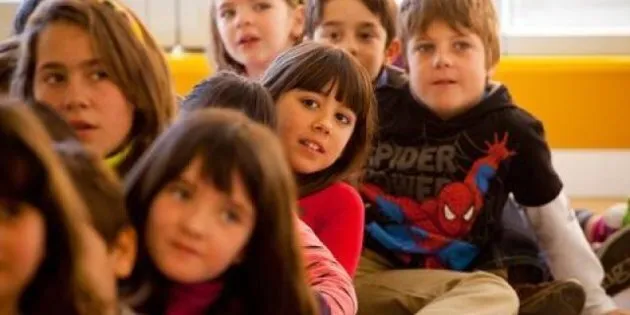

I get a lot of raised eyebrows when I tell people I write materials that introduce politics to children. It's a subject that can make even a mature adult's palms sweaty, and on the surface, it seems like the last thing anyone would want to bring up with their child. However, not only can you have a productive and engaging political chat with your young thinker, but you really should.
Here's why:
•Let's face it, voter turn-out in North America is pretty disappointing, especially with young people. If we want kids to take advantage of this very important privilege, to voice their opinions, and feel that they have a say in how their country is run, it needs to be instilled in them long before they're old enough to vote. They need to feel like it's a responsibility as well as a right, and that their thoughts matter.
•Politics isn't just all about elections. It's about big ideas, ideas that even small children can relate to easily, like power, fairness, equality, and decision-making. Believe it or not, they're probably already thinking about what it means to be in charge, how things ought to be run, and how change can happen. Why not engage them in conversation while they're at it?
•Talking politics has a spill-over effect. There are essential 21st-Century skills to be gained from this kind of dialogue, such as better communication, problem-solving, critical thinking, and global awareness, all of which can be used in other subject areas. Moreover, a child who feels at liberty to talk about politics will likely be more comfortable asking about ethics, science, life, the universe, and everything.
•It's cheesy, but true: the children are our future. The little munchkins putting raisins in their noses and clogging the air ducts with modelling clay really are going to be running the country in our lifetimes. If we expect them to excel as leaders, why not give them as much of a head start as possible?
•Just as a parent or teacher can encourage a child to discuss political issues, children can encourage the big people in their lives to open up to new perspectives. Seeing politics through a young pair of eyes just might spark a new desire to get informed and get involved.
So, how does a parent or teacher get these conversations started, and what's more, how do we keep them going? It really all boils down to establishing an open-ended discussion, and making room for a lot of different ideas. Politics isn't like math. It's not always (or maybe ever) clear which answer is right and which is wrong. Don't be alarmed or ashamed if you don't know the answers yourself. There's a reason why issues in politics have been up for debate for thousands (yes, thousands) of years.
Perhaps the best way to dive into politics with your kids is to pose an interesting question, encourage as many different points of view as you can, and talk about the ups and downs of each one. Discussion like this doesn't have to be limited to talking. Young thinkers do some amazing work through drawing, writing journals and stories, making up songs, role-playing and even playing games.
Ready to get political with your kids? Here are some conversation starters:
•What is power? What does it mean to be powerful?
•Who should be allowed to have power? How should this be decided?
•What's the best way to make important decisions? Who should make decisions?
•Does everyone always have to agree? Is it okay to make one person's opinion more important than someone else's? Why or why not?
•What makes someone a good leader? How can you tell?
•What makes a country great? What qualities should a great country have?
•What is fairness? How can you make sure that everyone is treated fairly?
•What is equality? Can people be different, but still equal?
•If you want to make a big change to your community or country, what's the best way to do it?
•What does it mean to have rights and responsibilities? Should they be the same for everyone?
•What does it mean to be a citizen? What would an ideal citizen be like or do?
Be prepared to be impressed. You may find that the next great political debate is taking place in your own living room.