U.S. Secretary of State Hillary Clinton testifies before the Senate Foreign Relations Committee on the September 11, 2012 attack on the U.S. mission in Benghazi, Libya, during a hearing on Capitol Hill in Washington, D.C., on January 23, 2013. (SAUL LOEB/AFP/Getty Images)
U.S. Secretary of State Hillary Clinton testifies before the Senate Foreign Relations Committee on Capitol Hill January 23, 2013 in Washington, D.C. (Photo by Chip Somodevilla/Getty Images)
U.S. Secretary of State Hillary Clinton testifies before the Senate Foreign Relations Committee on the September 11, 2012 attack on the U.S. mission in Benghazi, Libya, during a hearing on Capitol Hill in Washington, D.C., on January 23, 2013. (SAUL LOEB/AFP/Getty Images)
U.S. Secretary of State Hillary Clinton testifies before the Senate Foreign Relations Committee on Capitol Hill January 23, 2013 in Washington, D.C. (Photo by Alex Wong/Getty Images)
U.S. Secretary of State Hillary Clinton testifies before the Senate Foreign Relations Committee on the September 11, 2012 attack on the U.S. mission in Benghazi, Libya, during a hearing on Capitol Hill in Washington, D.C., on January 23, 2013. (SAUL LOEB/AFP/Getty Images)
U.S. Secretary of State Hillary Clinton testifies before the Senate Foreign Relations Committee on Capitol Hill January 23, 2013 in Washington, D.C. (Photo by Chip Somodevilla/Getty Images)
U.S. Secretary of State Hillary Clinton testifies before the Senate Foreign Relations Committee on the September 11, 2012 attack on the U.S. mission in Benghazi, Libya, during a hearing on Capitol Hill in Washington, D.C., on January 23, 2013. (SAUL LOEB/AFP/Getty Images)
U.S. Secretary of State Hillary Clinton testifies before the Senate Foreign Relations Committee on Capitol Hill January 23, 2013 in Washington, D.C. (Photo by Alex Wong/Getty Images)
U.S. Secretary of State Hillary Clinton testifies before the Senate Foreign Relations Committee on the September 11, 2012 attack on the U.S. mission in Benghazi, Libya, during a hearing on Capitol Hill in Washington, D.C., on January 23, 2013. (SAUL LOEB/AFP/Getty Images)
U.S. Secretary of State Hillary Clinton testifies before the Senate Foreign Relations Committee on Capitol Hill January 23, 2013 in Washington, D.C. (Photo by Alex Wong/Getty Images)
U.S. Secretary of State Hillary Clinton arrives to testify before the Senate Foreign Relations Committee on the September 11, 2012 attack on the U.S. mission in Benghazi, Libya, during a hearing on Capitol Hill in Washington, DC, on January 23, 2013. (SAUL LOEB/AFP/Getty Images)
U.S. Secretary of State Hillary Clinton arrives to testify before the Senate Foreign Relations Committee on the September 11, 2012 attack on the U.S. mission in Benghazi, Libya, during a hearing on Capitol Hill in Washington, D.C., on January 23, 2013. (SAUL LOEB/AFP/Getty Images)
U.S. Secretary of State Hillary Clinton testifies before the Senate Foreign Relations Committee on the September 11, 2012 attack on the U.S. mission in Benghazi, Libya in the Hart Senate Office Building on January 23, 2013 on Capitol Hill in Washington, D.C. (MANDEL NGAN/AFP/Getty Images)
U.S. Secretary of State Hillary Clinton testifies before the Senate Foreign Relations Committee on the September 11, 2012 attack on the U.S. mission in Benghazi, Libya, during a hearing on Capitol Hill in Washington, D.C., on January 23, 2013. (SAUL LOEB/AFP/Getty Images)
U.S. Secretary of State Hillary Clinton testifies before the Senate Foreign Relations Committee about the September 11 attacks against the U.S. mission in Benghazi, Libya, on Capitol Hill January 23, 2013 in Washington, D.C. (Photo by Alex Wong/Getty Images)
U.S. Secretary of State Hillary Clinton testifies before the House Foreign Affairs Committee on the September 11, 2012 attack on the U.S. mission in Benghazi, Libya in the Rayburn House Office Building on January 23, 2013 in Washington, D.C. (MANDEL NGAN/AFP/Getty Images)
U.S. Secretary of State Hillary Clinton is seated before testifying before the House Foreign Affairs Committee on the September 11, 2012 attack on the U.S. mission in Benghazi, Libya in the Rayburn House Office Building on January 23, 2013 in Washington, D.C. (MANDEL NGAN/AFP/Getty Images)
U.S. Secretary of State Hillary Clinton testifies before the House Foreign Affairs Committee on the September 11, 2012 attack on the U.S. mission in Benghazi, Libya in the Rayburn House Office Building on January 23, 2013 in Washington, D.C. (MANDEL NGAN/AFP/Getty Images)
The real question is, how is it possible to be so flat-out wrong when anyone can fact-check that on google in ten seconds flat?
It's not ignorance, since I'm sure the author reads the news as much as anyone. But rather it shows how these biases and assumptions actually shape how we see the facts in the world. Bias isn't just a problem of having a stereotyped view of another group of people; it becomes a kind of willful denial of facts that contradict your point of view.
This writer literally cannot seem to see, or remember seeing things that go against his perceptions. His view of the world is shrunken and limited, and he is missing out on facts that undermine the reality in his mind.
But the real question is - why does the author seem to remain unaware of these facts even existing, despite this being 2013 and google being the easiest tool of fact-checking ever invented?
It's not simple ignorance. I'm sure the author watches the news as much as anyone. But it is a perfect example of the kind of double-standard he doesn't seem to be aware even exists (which is necessary, since that kind of double standard would cease to exist if people were aware of it).
In his mind, it doesn't even register that male politicians CAN cry, let alone remembering that they have repeatedly. That information simply slips away since it doesn't fit the preconceived notions he is starting from. Facts are pared away or ignored depending on bias, and that is used to reinforce whatever belief he was starting from. It's a coping mechanism to make sure preconceived notions never have to face the challenge of the real world.
If a man tears up in relating tragic deaths, I for one would not criticize the reaction. I would recognize that the individual was human, and had been touched by the tragedy. As for women and children being rescued first in the event of a ship sinking or a building burning, we only have to look to the recent, factory fires in Bangladesh to see that women and children were not being rescued as this writing would suggest.The abuses that take place in America often towards women and some men, and children is not indicative of preferential treatment toward females. I agree that the sexes are different, in as much as I agree that there are differences in individuals, men or women. Double standards exist, but this is a poor example of a double standard.
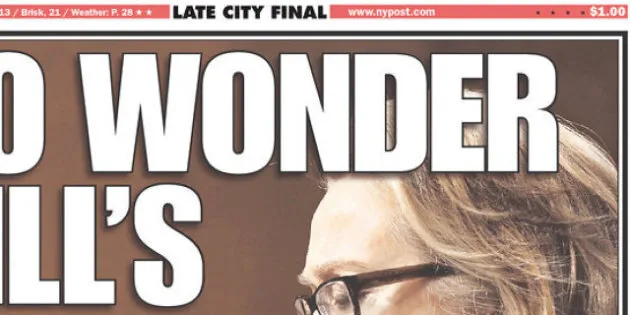
The double standard that favors women is shrinking as yesterdays news about letting women fight in the front line in the US shows. Men can cry on national news and not be ridiculed yet they still don't get asked who their favorite designer is or get headlines like "Now we know why Bill is scared!"
Also google "politicians ties" to see numerous articles analyzing the clothing of male politicians.
That is unfortunately a reality that cannot be pointed out in some circles, at least not without facing cries of misogyny or of sexism... We have examples of this on this very page. It seems some aim for the gold in the Oppression Olympics, and the best way they think they can get it is by making even discussing the possibility that the other group can face some disadvantages politically incorrect.
So we can only consider problems women may face, talking about problems men may have as men is verboten. In other words, "women's personal problems are political, men's personal problems... are theirs and theirs alone, let them man up and deal with then alone".
Maybe that attitude that you describe has come about because historically, so many of women's problems have come about because of men's attitudes towards them. India is a great and current example of that very thing. We women in Canada didn't even get to vote in this country until 1918 despite the fact that we were giving birth to the very men that wouldn't allow us that right. Muslim women are blamed if a man rapes them..... So maybe not such a surprise that women's problems are 'political'.
Think of the expression "Be a man!" that is often used on people. What does it mean? It mean "Deal with it yourself and stop bothering us about it".
research ..just a little
Let's pretend this is a real, verifiable thing that happens in real life. Okay. Such a policy is SYMPTOMATIC OF PATRIARCHY. Men are assumed to be strong, and women weak. Any upset in that balance is seen to be shameful, for men and women.
But no. Women have it easy, because their tears elicit pity, entail emotional frailty. And a man's tears are womanly. Shameful by association.
This is BS. Men in power have class solidarity, but little if any gender solidarity. History is full of evidence of that. Men in power have always demonstrated a complete lack of interest in the health and lives of the men of the lower classes. They have regularly sent them to die in wars or in back-breaking jobs. These men have more solidarity with their wives, mothers and daughters than with the men down on the social ladder.
The preference of society for taking care of women's problems over men's is pretty evident. It's not merely hypothetical as you claim. And it's pretty sick to try to twist this reality to be able to claim that the fact that society prefers helping her over him is in fact discriminatory against HER.
As a mom with a son, I see the world differently than I did before. I am determined to show him the work of people who say what they mean, mean what they say, and then do what they said they'd do. Are systems unfair? Yup. Will people ever live in complete equality? I don't know. But the ones who will feel the greatest satisfaction at the end of the day are those who stand by the principle of not denigrating others to advance their beliefs or agenda. So good job, Mr. Agwu, for prompting me to think and respond. Keep writing, sir.
It seems, sadly, that you're one of those men who feels threatened by equality. As if somehow your own power and freedom will be reduced. I'm sure by the time I'm done writing this there will be at least one anti-feminist" or anti-woman response applauding your article.
1) your point about men being ridiculed when they cry is completely baseless. Recently Bush, Romney, and Obama all teared up and had positive reception (google it). When Hillary teared up, there were many questions of "faking it", and need I mention any of the other issues that the op-ed you're responding to raised?
2) besides being incorrect in your assumption that men do not care about how women look in politics - even if it were true - the fact remains that this sort of commenting and frivolity towards female politicians is alive and well. Regardless of who is doing it, it's still a giant hurdle that women need to overcome to be taken seriously and become capable of helping shape our world for *everyone*.