Featuring fresh takes and real-time analysis from HuffPost's signature lineup of contributors
Jordan Bateman

GET UPDATES FROM Jordan Bateman
 

B.C. Voters Can Send City Hall a Message: Less Taxes, Control Spending

Posted: 11/17/2011 11:17 pm

Election days are tough on candidates, but it's what comes after that is tough on taxpayers.

Win or lose, anybody brave enough to put their name on a ballot should be commended. It takes guts to make a stand and to offer your service publicly to your community. But, ultimately, those of us who vote on Saturday, Nov. 19, need to send a strong statement to our new mayors and councillors:

We cannot afford to keep going the way we have been going.

As the Canadian Federation of Independent Business reports, municipal spending has grown at four times the rate of population growth over the past decade. This is not sustainable for taxpayers.

That's why the Canadian Taxpayers Federation (CTF) has worked so hard to give candidates a solution: the Taxpayer Protection Bylaw. As part of our contract with taxpayers, the CTF challenged candidates to support a bylaw enshrining important principles such as a property tax cap, direct democracy, accountability and perhaps most importantly, a mechanism for mayors and councillors to put their own paycheques on the line.

That's right: communities with a Taxpayer Protection Bylaw would hold tax increases to the rate of inflation. If they didn't, and didn't have a referendum authorizing them to go above that line, the mayor and councillors would take a 15 per cent pay cut.

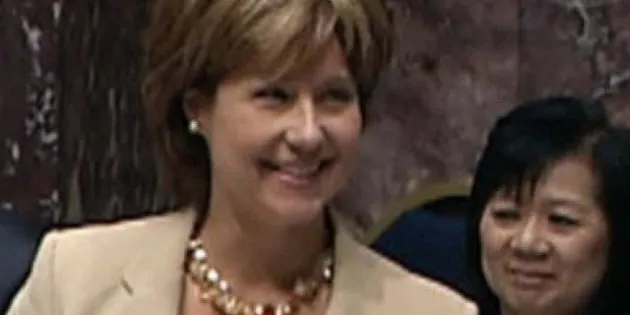
This is similar to what happens with the premier and cabinet in British Columbia. The Balanced Budget and Ministerial Accountability Act requires 20 per cent of their pay to be held back every year. If they meet their ministry's annual goals, they get half of that holdback returned to them. If the government posts a surplus, they get the other half. With British Columbia in deficit, Premier Christy Clark and her cabinet are all currently taking a 10 per cent pay cut, no matter how their ministries perform.

Enshrining these rules in a bylaw offers clear direction to municipal staff preparing budgets. Instead of coming to council with a long list of spending requests and a tax increase to match, they would be mandated to prepare the budget based on a tax increase held to inflation -- or lower. It puts feet to the campaign rhetoric.

Local residents have taken up the cause -- showing up at all-candidates meetings and writing letters encouraging their community's prospective leaders to sign the CTF pledge. These citizens include Linda Falkener of the Thompson-Nicola Regional District (TNRD), whose elected board wouldn't allow speak at a recent meeting because she wanted to address their tax and spend record. She kept working, challenging candidates to sign, and it paid off: a TNRD candidate endorsed the Taxpayer Protection Bylaw idea.

There is Nanaimo's Janet Irvine, who wrote a letter to the local paper, asking her community's candidates to get on board. Sure enough, a Nanaimo Council candidate signed the CTF's Contract with Taxpayers.

Janet and Linda, along with many others, have kept the pressure on local candidates. It's worked: 90 candidates across British Columbia have promised to support the Taxpayer Protection Bylaw and its commitment to keeping property tax increases under the rate of inflation.

Now it's up to the rest of us. The candidates are on the record, but if we don't come out and vote on Saturday, we have squandered our best chance to make our priorities known.

Municipal elections are notable for their small turnout. In many communities across B.C., a few votes can make a big difference, which is why people concerned about high taxes and bloated spending need to vote to change the culture of their council -- and then hold their new leaders accountable for their decisions. The Taxpayer Protection Bylaw will help, but ultimately the power lies with the people: if enough of us demand a change, we will get it.


Follow Jordan Bateman on Twitter: www.twitter.com/jordanbateman

Election days are tough on candidates, but it's what comes after that is tough on taxpayers. Win or lose, anybody brave enough to put their name on a ballot should be commended. It takes guts to make...
 
 
  • Comments
  • 14
  • Pending Comments
  • 0
  • View FAQ
Comments are closed for this entry
View All
Favorites
Recency  | 
Popularity
This user has chosen to opt out of the Badges program
photo
Vapula
Failure is not an option
02:14 AM on 11/20/2011
The public seem to be held to ransom. No one resent paying for services but when council spending is 4x time population growth someone is getting ripped off. The Councillors will get a pass this time but it won't continue forever.
11:45 PM on 11/19/2011
BC can't lower it's taxes, it has went so far socialist that all those "feel good" programs, laws, and regulations need tax dollars to pay for. BC can expect higher taxes over the next few decades to cover the mess the province has gotten itself into.
photo
HUFFPOST SUPER USER
dannyboy551
Emperor Harper needs to be booted out of power
01:39 PM on 11/18/2011
Batemen - fold it sideways. You are just another intellectually bankrupt Con clown masquerading as a citizens advocate. You bozos inflicted Stephen Harper on this country & for that you are going to be paying for a long long time.
This user has chosen to opt out of the Badges program
photo
12:52 PM on 11/18/2011
I'm voting for fewer big box retailers and less landfill in farmlands, actually. If that comes with higher taxes, so be it.
11:06 AM on 11/18/2011
Looks like another pro-US clown trying to foist that bankrupt system onto Canadian society.
11:05 AM on 11/18/2011
Looks like US source ideas infecting Canadian local government discourse.
10:18 AM on 11/18/2011
Nowhere in this article are we told what municipal services we're supposed to do without, or indeed provided with examples of bloated municipal spending.

Then again Bateman urges lawmakers to take tax pledges, and such imbecilic posturing is at odds with actual meaningful discourse.

Canada needs tax pledges just about as much as HuffPo Canada requires yet another right-wing columnist. What did us poor Canucks do to warrant this? Does HuffPo.com feature articles from Grover Norquist?
photo
HUFFPOST SUPER USER
toofarleft4thisworld
The Right Is So Wrong
06:37 AM on 11/18/2011
i hope they start with any subsidies to advocate groups they might make. we shouldn't be forcing any contracts on taxpayers (to cut services, no doubt) until we re-establish our social contract with the owners of the means of production.
05:33 AM on 11/18/2011
I agree with some of the comments here. If the crime rate rises but inflation doesn't, do we spend less preventing and fighting crime? As far as property taxes go, the biggest abusers are the biggest houses in the suburbs. The farther you are from the centre of any town or city the more it costs to service your property. Anyone living in the afluent neigbours should be expected to pay more for living in a less densily populated area than someone living in a high rise. As far as holding back 20% of the pay, councilers are better at prudency than most corporate CEO's who demand high and salaries and bonuses regardless of the companies performance. That is exactly one of the issues the OW is all about.
photo
TT Esty1
Failure is a temporary condition.
02:01 AM on 11/18/2011
I certainly would not vote for a candidate that would sign a pledge to keep tax increase under the rate of inflation because I would not want such an slavish and inflexible person in such a responsible position. The utter simplicity of such a proposal should alert one to its idiocy.

Let us take a simple example. It snowed today and if forecast holds true, it will snow often this winter. Would you accept the City not plowing the streets because the cost incurred would put them over budget? The possibility that many would not be able to get to work would be subjected to the cost of enabling transportation. Your loss of wages would be specific to you and perhaps a saving to your employer since if you can't get to work neither could your clients or customers and, your employer would not need you. Of course, your employer may also not be able to get to work. Thus, a budgetary requirement would shut the City down.

Your argument for tax control would be more valid if you would be specific about where the tax dollar ought not to be spent and where it ought to be spent. Don't bumper stick your arguments.
This user has chosen to opt out of the Badges program
photo
Maria Korovessis Sewell
To decimate is to reduce by one tenth.
10:48 AM on 11/18/2011
F&F. I'm growing weary of simplistic arguments and one note causes.
03:54 PM on 11/18/2011
Agree. The Taxpayers Federation and its ilk harp endlessly about the taxes we pay, but never speak to the essential services - clean water, proper sewerage and garbage management, recreational facilities, urban containment and many others - that municipalities provide. And the rate of inflation? How then do we accommodate growth, or ensure sufficient reserves so that infrastructure can be maintained and replaced without kicking those costs down the road to the next generation. The approach is beyond simplistic - it is downright dangerous.
photo
unitron
Reverse Chron Order never stays checked
01:43 AM on 11/18/2011
Or they could use proper grammar and demand either "fewer" taxes or that less be taken in taxes.

Taxes is the plural of tax. A tax is something discrete which can be counted, therefore taxes are discrete things which can be counted.

Therefore, the proper phrasing is "fewer taxes".