Featuring fresh takes and real-time analysis from HuffPost's signature lineup of contributors
Kapil Khatter

GET UPDATES FROM Kapil Khatter
 

Baby Formula Ads Disguised as Education Can Be Deadly

Posted: 01/21/2013 5:37 pm

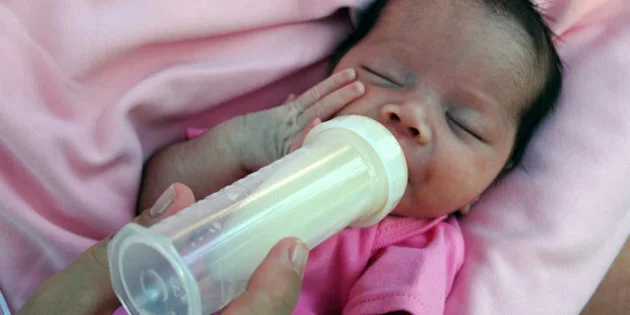
Formula can kill. I know that's harsh, but it's true. Like medications, formula can have side effects, namely a sick child, and sometimes a seriously sick child. An international code barring the advertising of formula exists for just that reason, yet formula companies around the world continue to actively convince parents to buy and use their products.

Baby formula does have a role of course. Not every woman can or is ready to breastfeed; milk banks and milk sharing are often not available or are not a comfortable choice. But helping women breastfeed while formula companies are helping them not to is as frustrating as helping people eat better in this junk food world, or helping them exercise in this age of the car.

The goal is not to judge women and their choices around breastfeeding, but to judge those who make breastfeeding more difficult: the workplaces and public spaces that are not breastfeeding-friendly, the hospitals and health care providers that subtly or not so subtly discourage breastfeeding, the companies who try to increase sales regardless of the public health consequences.

Prenatal information packages are famous for advertising disguised as education but I was still surprised to find formula ads in the one that came with my wife's recent pregnancy. Her family doctor knew nothing about them, turns out, they got in through other clinic staff, and they were promptly removed.

At my own clinic, the Nestle sales representative gave us her personal story of needing to supplement with formula so she could sleep better at night. Perfect sales technique, I must say. With no mention, of course, that according to the evidence women who do so are more likely to stop breastfeeding earlier.

BLOG CONTINUES AFTER SLIDESHOW

Loading Slideshow...
  • Their Baby Cuteness Doesn't Predict Adult Attractiveness

    A study published in the journal <em>Infant Behavior & Development</em> revealed that the standard "<a href="http://www.google.com/url?sa=t&rct=j&q=&esrc=s&source=web&cd=1&ved=0CCQQtwIwAA&url=http%3A%2F%2Fwww.youtube.com%2Fwatch?v%3DXTV8bOv3Jhs&ei=0uLBToKrMuPu0gHkmNH0BA&usg=AFQjCNFtutJJhlTFZJ2fm-cmsDo46XMpzw" target="_hplink">You Must Have Been a Beautiful Baby</a>" has little to do with reality. When 253 college students were asked to rank photos of the same individuals as infants and young adults (without being told who was who), there was <a href="http://bodyodd.msnbc.msn.com/_news/2011/08/31/7542626-must-have-been-a-beautiful-baby-maybe-not" target="_hplink">no relationship between how cute the students found the babies and how attractive they found the grown-ups</a>.

  • They're Good At Sharing

    No, really, it's true. It doesn't matter how many times you've heard the shout "Mine!" -- research shows babies can sense fairness at 15 months. During one study at the <a href="http://www.washington.edu/news/articles/babies-show-sense-of-fairness-altruism-as-early-as-15-months-1" target="_hplink">University of Washington</a>, 47 babies observed videos of an experimenter distributing milk and crackers to two people. When one recipient received more food than the other, the babies paid more attention. That means they had expected a fair distribution. The researchers also found that babies who did notice unfairness were more likely to share their own toys.

  • They Read Minds

    OK, so they're not exactly psychic. But a <a href="http://www.sciencedaily.com/releases/2011/11/111101130204.htm" target="_hplink">recent study</a> from the University of Missouri found that babies just 10 months old are starting to follow the thought processes of others. Yuyan Luo, an associate professor of developmental psychology who conducted the study, tells The Huffington Post, "Babies, like adults, when they see something for the first time -- when something is surprising -- they look for a long time. It shows [they recognize] something is inconsistent." It's called the "violation of expectation," she explained. When babies are surprised by something or notice something unexpected has happened, they tend to gaze at that thing longer. In Luo's research, babies watched actors consistently choose object A (such as a block or a cylinder) over object B. When an actor then switched to object B, the babies stared for about five to six seconds longer, meaning they recognized the change in preference.

  • They're A Little Bit Racist

    Don't judge a book by its cover. Treat all people the same. We're all equals. These are sentiments parents strive to teach their kids from a very young age. And they should. Starting, like, immediately. Researchers at the University of Sheffield in the United Kingdom found that babies at three months <a href="http://www.world-science.net/exclusives/060212_racefrm2.htm" target="_hplink">begin showing a preference for the faces of people of their own race</a>. But not all hope for equality is lost. The same study showed that babies who are exposed to people of all different races are less likely to develop bias at such an early age.

  • The Rhythm Is Gonna Get Them

    Researchers from Brigham Young University found that five-month-old babies can <a href=" http://news.byu.edu/archive08-oct-babymusic.aspx" target="_hplink">identify an upbeat song as being different from a series of sad, slow songs</a>. In other words, they are happy. They know it. They will clap their hands. Or stare longer, as the case may be. The experimenters showed babies an emotionless face while music played. When they played a new sad song, the babies looked away. When the music pepped up, the babies stared for three to four seconds longer.

  • They Can Tell The Good Guy From The Bad Guy

    Babies have a sense of morality at six months old, <a href="http://www.dailymail.co.uk/news/article-1275574/Babies-know-difference-good-evil-months-study-reveals.html" target="_hplink">say Yale researchers</a>. During the Yale study, babies watched a puppet show in which a wooden shape with eyes tried to climb a hill over and over again. Sometimes a second puppet helped him up the hill, and other times a third puppet pushed him down. After watching the act several times, the babies were presented with both puppets. They showed a clear preference for the good characters over the bad ones by reaching to play with the good puppet.

  • They Can Read Lips ... Kind Of

    Dr. Janet Werker of the University of British Columbia, who studies how babies perceive language, found that if a mother spoke two languages while pregnant, her infant could <a href="http://www.livescience.com/13016-bilingual-babies-brain-language-learning.html" target="_hplink">recognize the difference</a> between the two. And they don't even have to be spoken out loud. Werker's research found that infants four to six months old can <a href="http://www.nytimes.com/2011/10/11/health/views/11klass.html" target="_hplink">visually discriminate two languages</a> when watching muted videos of someone speaking both.


Direct-to-parents advertising continues as well, our friend the Internet has made that extra easy. Ads for the for the ever-so-fun-sounding Similac Club attach to many of my web searches. Membership in the Similac Club can get you a free formula can and a few coupons for more (but after that you are so on your own).

Research suggests that, unfortunately, these kinds of advertising work. In countries like Canada, they impact how long women breastfeed more than whether they start. Breastfeeding on day one has become normal here (over 90 per cent), thanks to rooming in with mom, year-long maternity benefits, better education. But still, by six months, just over half of babies are still breastfed, and most of that is supplemented with formula.

Baby formula is a big killer in less developed countries, but even where access to health care is good, not breastfeeding increases illness and death. A U.S. government agency review of the 400 or so best studies found that breastfed babies were less likely to be overweight, get diabetes, have ear infections, or suffer from diarrhea or asthma when they were older. They were less likely to get childhood leukemia, to die from sudden infant death syndrome (SIDS), or to get necrotizing enterocolitis (which is as bad as it sounds).

And the costs, oh the costs. An analysis in the journal Pediatrics, based on 2007 data, estimated that if 90 per cent of U.S. families used breast milk alone till only the age of six months, then each year over 900 fewer American children would die and $13-billion in health care costs would be saved.

Yet companies are still allowed to use advertising to convince parents to use their products. Some argue that manufacturers only advertise to convince those already about to use formula to use their brand, which is part of what they are doing of course. But if you know anything about advertising you know that creating demand, expanding the market, is not just a bonus, it is key to the game itself.

Others make the funny argument that companies have the right to educate consumers about formula. Please. Those looking to make a buck from the product have no business "educating" about it. We wouldn't trust Universal Studios to recommend movies, or Ronald McDonald to teach us healthy eating. Why would we trust what formula companies have to say about their own products?

But let's say you were to convince me that formula advertising has a role. We would want the ads to be truthful, no? How about the ads having to say: "warning: using formula instead of breast milk may cause asthma, ear infections, obesity, diabetes, leukemia or necrotizing enterocolitis" in nice bold print? Put that in your ad budget.

But then a group of important looking and sounding people, namely the world's health ministers, already decided in 1981 that formula advertising must stop. As part of the World Health Assembly they passed the International Code of Marketing of Breast-milk Substitutes calling on companies not to advertise their baby formula or baby bottles, neither publicly nor through hospitals and health care providers.

According to UNICEF, over a hundred countries have put at least part of the code into law, the United States being a glaring exception. In Canada, formula companies have to follow nutrition and health claim regulations on formula packages. They have also been asked nicely to pretty please follow the rest of the international code.

But we all know how well nicely and pretty please work. Manufacturers tend to follow the law not a code. Not a surprise given there are no consequences for ignoring the code. Which is why Canada needs a law, and one that is enforced.

We need to do everything we can to make sustained breastfeeding easier for women to choose. Our children will be healthier for it. Our health care budgets as well. It should be an easy decision. But nothing is easy when it affects profits.


Follow Kapil Khatter on Twitter: www.twitter.com/@IllGotGains

FOLLOW CANADA LIVING
Formula can kill. I know that's harsh, but it's true. Like medications, formula can have side effects, namely a sick child, and sometimes a seriously sick child. An international code barring the adve...
 
 
  • Comments
  • 21
  • Pending Comments
  • 0
  • View FAQ
Comments are closed for this entry
View All
Favorites
Recency  | 
Popularity
08:58 PM on 01/25/2013
Mixing formula with contaminated water is the problem in undeveloped countries.
When did it become more important how the baby is fed, than that the baby is fed. I worked on an ob unit for 20 years and the breast feeding consultants always tried to convert the formula feeding moms.Some of the information and "studies" they quoted were nothing less than propaganda to scare parents. One "study" said if a child were formula fed the child would have a lower IQ, become a criminal, and hate their mother. [The study was paid for by La Leeche League] If a baby was in the NICU and was given a pacifier the breast feeding consultants would come unglued. It is stressed that a mother bonds better with a baby if she nurses, but that means a father is never bonded with the baby, because they can't nurse. Then the breast feeding pros teach moms to pump, store, freeze, and thaw breast milk, but would not show them how to bottle feed the breast milk to the infant.
Thank a formula company for putting millions of dollars into developing surfactant for premature lungs. It has saved many premature infants, and an improved quality of life.
The scare tactics and propaganda used to make the formula feeding moms feel inadequate and that they have failed before they have even started is wrong.
BTW, I formula fed my kids, both made deans list at college, have never been arrested, AND love their mom.
04:56 PM on 02/05/2013
"BTW, I formula fed my kids, both made deans list at college, have never been arrested, AND love their mom."

*Sigh* Here we go again. This is not about YOU and your tiny window of experience. It is about children ON AVERAGE. Formula-fed children ARE more likely to die of SIDS, develop cancer/diabetes/digestive disorders and they ARE SCIENTIFICALLY PROVEN to have lower IQs.

YOUR personal experience doesn't set the rule. "But...But... But... MY KIDS ARE JUST PEACHY!" Doesn't qualify as a controlled scientific study.

Repeat after me: "Science is not out to personally offend me. Scientific proof and education using said proof as a cornerstone is more important to society than preventing some mothers from feeling butt-hurt."

Can you direct me to the evidence that points to this study being "paid for" by Le Leche League? I mean seriously, just because you typed it doesn't make it true.

http://www.scientificamerican.com/article.cfm?id=surety-bond-breast-feeding
07:38 PM on 02/05/2013
Did you miss the part about 20 years working as a nurse on an OB unit??? I have a college education which included critical evaluation of "scientific studies" You are supposed to look at the size of the group, the "control" aspect of the study, who paid for the study are a few examples. One aspect to look at as far as the IQ portionis what was the socioeconomic make up of the study group. It is a fact that lower socioeconomic groups have a lower breast feeding rate, as well as having lower Iq scores. So which is the cause of lower scores, using formula, or having fewer advantages in life? Can I site you that study, no I can't because this occurred over 15 years ago. By the way, exactly how does one "scientifically" measure bonding. Bonding is an emotion, and the last I heard, you can not measure emotions.

And by the way, the whole tone of your response OFFENSIVE and is an example of exactly I was talking about. Referring to mothers as being "butt hurt" is offensive, why can't women support each other, rather than saying, " I AM A BETTER MOTHER THAN YOU ARE".

And my children are beyond your dismissive "peachy". My son graduated from college with high honors. My daughter made deans list despite being dyslexic. My children are AWESOME!!!!!
09:48 AM on 01/25/2013
This is exactly the type of article that makes mothers who cannot produce enough breast milk to nourish their child feel like a failure. The pendulum has swung so far in the direction of exclusively breastfeeding, that it is making a large number of women depressed and unhappy because they are made to feel like giving their baby formula is akin to feeding them rat poison. Formula is not dangerous, and I don't know why a "doctor" would even write an article like this. I agree that society is not designed for the breastfeeding mother. Why not work on those issues rather than villifying formula companies for providing a very necessary product. And so what if a mother wants her life, her body, and her sleep back. A happy mother is more important to a child than breastmilk.
photo
HUFFPOST BLOGGER
Kapil Khatter
05:50 PM on 01/25/2013
The point isn't to "vilify" companies for providing a product some parents need, it's to get them to stop trying to actively convince more parents they need it so the companies can make more money.
01:36 PM on 02/01/2013
This is what all companies do. It's called business. The job of marketers is to convince you that you need a product, whether it be laundry detergent or formula.
photo
jeplanet
What Would Buffy Do?
02:07 PM on 01/23/2013
The first line of your article is alarmist, and frankly so is the rest of it.
How can you claim that you are not judging mothers when you make such inflammatory statements?
I'm incredibly disappointed by what I read here.
photo
HUFFPOST BLOGGER
Kapil Khatter
02:27 PM on 01/24/2013
But the first line is true. The evidence suggests using formula increases the risk of death. Hundreds of children in developed countries, thousands and more in the Global South where other risks are higher and health care is less available.

I don't mean to suggest using formula will harm your child, only that the risk is there, the risk is increased. So if you choose to use it, balanced against the benefits, balanced against other practicalities, then alright.

But I want people to know the facts (to the degree we can know them) when making the decision. Advertising skews things, distorts people's perceptions of the risks and benefits.

I think if you looked up estimates for the number of extra children around the world who die because of formula use that you would still consider the article too strong.
photo
jeplanet
What Would Buffy Do?
05:48 PM on 01/24/2013
"Strong" is not a word I would use to describe your fear-based, one-sided, and incredibly prejudiced premise.
And talk about cherry picking your data. We both know that formula use in underdeveloped countries is caused by the fact that it is mixed with contaminated water. Formula is responsible for saving literally millions of infants over the years. Its good far outweighs its potential for harm.
At the end of the day, this is just one more example of someone who had no problem telling mothers, "You're just not good enough."
Shame on you, doctor.
02:04 PM on 01/23/2013
Formula companies definitely have an impact on feeding choices, when my daughter was born I was breastfeeding her and a friend of mine (who is planning to have kids in the next couple years) asked me "so when do you get to start feeding [your daughter] formula?". I politely replied that I don't plan to ever give her formula and we discussed some of the benefits of breastfeeding and risks of using formula. Four months later we are still exclusively breastfeeding, with about 3-4 bottles of expressed breast milk when I had to be away from my daughter.
11:15 PM on 01/22/2013
Dr. Khatter you are SPOT ON! Most moms want to breastfeed (85%) but most (60%) are being prevented from reaching their personal breastfeeding goals by the Breastfeeding Booby Traps(R) --the myriad societal barriers that moms and babies unfairly face. In this climate, the solution is NOT to pressure or judge moms who are getting the bum end of the deal, but to help them to make informed decisions and to carry those out without undue influence. No one is saying formula should go away, or that it doesn't have a place in infant feeding. Surely it does -- there are mothers who can't or don't breastfeed and those moms and babies deserve to make an informed decision (incl being made aware of the "Next Best" substitute -- banked donor human milk). The problem is the predatory marketing of formula to vulnerable new moms designed to undermine mother's milk for profits upwards of 8 BILLION U.S. dollars/yr. That's not just a massive conflict of interest, it's a massive Booby Trap! And it's working brilliantly: 98% of moms formula-feed during the first year of their child's life even when that wasn't their plan. There's a fight to be had, but it's not mom v mom or breast v. bottle, it's moms v. the Booby Traps -- the true source of the why "breastfeeding didn't work" for the vast majority. Danielle Rigg, Co Founder, Best for Babes Foundation.
photo
HUFFPOST SUPER USER
jimboy71
Hen Diapheron Heautoi
07:53 PM on 01/21/2013
At least they aren't selling chalk or fanta as baby food like before.
photo
HUFFPOST SUPER USER
wendyweb47
Keeping an open mind
07:31 PM on 01/21/2013
Totally agree - we need to make it easier and more accepted for women to breastfeed. The formula companies have been using their education/advertising tactics for generations. I was a La Leche League Leader in the 80's and the only thing that has changed is the slicker ads by formula companies.

This issue is even more critical in third world countries. Formula companies use women in third world nations as health representatives to hawk their products. These women are given 'doctor's white coats' and sent into hospitals and clinics to encourage women that "healthy babies in the west are given formula". However, in a third world nation formula costs more than women can afford so they water it down - usually with dirty water (because they have no access to clean), and feed babies from dirty bottles. Baby gets sick and is hospitalized. Since breastfeeding is often the only form of contraception when it ends mom gets pregnant again - so now she has a sick baby, and is pregnant too close together so she cannot care for either child well.
09:29 AM on 01/22/2013
The fact that women have to mix the nice formula powder with filthy local water is the main killer.... I remember my family used to boycott Nestlé in the 1970s for this practice, maybe it's time to do so again?
photo
HUFFPOST SUPER USER
wendyweb47
Keeping an open mind
03:43 PM on 01/22/2013
Sadly its an issue that most people are unaware of - plus Nestle owns SO many other familiar brands - candy/food products/etc that people think its too hard to boycott. I too participated in the boycotts and wore a little pin about it - got people asking questions so I could educate them.
This user has chosen to opt out of the Badges program
09:52 PM on 01/23/2013
Some of us still do boycott Nestle - their behaviour is still problematic and they get away with as much as they can. Nestle's fingers are into so much at the grocery store. Another issue was that because of the expense many were watering down the formula so babies weren't getting enough.