Canada has had many shining moments to be proud of. Walking around Parliament Hill you can see the monuments to those achievements. They serve as a reminder of what our country can be at its best.
But as a nation we've also had moments to be less than proud of. We don't have monuments to mark most of those mistakes, but in some cases we've seen later governments apologize and take responsibility for them. When those apologies have been made, the government of the day has promised a new approach to build a new, respectful relationship with the victims and their communities. While it has been hard to get governments to take that first step of apologizing, taking that second step of creating that new relationship has been even harder.
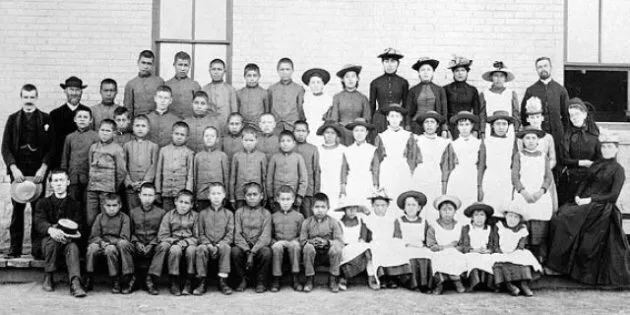
A good example is the residential schools apology. When Prime Minister Harper issued the apology, he promised to forge a new relationship with Aboriginal Canadians. Four years later, we can look to his government and see just how far they have come.
There are still survivors of that government policy who have yet to have their cases addressed. The case of seven Inuit, who have come to be called the "Experimental Eskimos," is a good example. In the early 1960s, they were removed from their homes, without the informed consent of their parents and sent to school in the South under a federal government program. It was not until 1997 that they were able prove that this move was an "experiment." For the past five years they have been in court fighting with the federal government to get redress for what was done to them. But the government continues to stonewall and fight, refusing to deal with this clear case of wrong-doing.
Another example comes from the reaction of Conservative ministers to legitimate concerns. We have seen ministers of the crown attacking the messengers, hurling insults and ignoring the important concerns they raise. Sadly one of the worst offenders has been Health Minister Leona Aglukkaq.
In an attempt to defend her cuts to Aboriginal health funding from legitimate questions, she attempted to use her heritage as a shield, accusing opposition members of crossing racial lines. When the UN Special Rapporteur raised his concerns about access to food in Canada, she accused him of being a European academic who had a "lack of understanding and knowledge about aboriginal people" and accused him of writing "a report on what is best for me as an aboriginal person."
I was shocked to hear her comments, especially given the important position that she holds. She knew full well that Aboriginal people across Canada are struggling with these issues. The evidence is clear on that point. Was she trying to tell the Inuit in Nunavik or the Cree in Northern Saskatchewan that paying over $12 for a jug of orange juice is not a barrier to eating healthily? She of all people should know better and maybe that is why a week later, she backed off some of her comments but not those about the UN Special Rapporteur. She tried to bury her head in the permafrost and to use her identity to avoid legitimate questions. That's not a new relationship with Aboriginal Canadians, only a new face.
The final insult has unfolded over the past few weeks with the Conservatives budget and their response to criticism. Aboriginal communities all across the country are facing many serious issues: under-funded education system, lack of health services, rising cases of diabetes, prescription drug abuse and other health ailments and difficulties accessing nutritious food. These are all important issues that need to be addressed quickly and require the support of government.
In the face of these concerns, the Conservatives moved to slash money from budgets from programs that help deal with these needs. They cut 40 per cent of the health funding from the Assembly of First Nations and Inuit Tapiriit Kanatami, while cutting 100 per cent of the same funding for the Métis National Council and Native Women's Association of Canada. They cut funding to the Community Access Program, which provided affordable Internet access to students in Aboriginal communities. And when it comes to food, in 2011 they did away with the Food Mail program, handing it over to private interests. That caused the price of food in the North to spike. None of these changes did anything to address these concerns and in most cases have made them worse.
So here we are after four years. We have our apology and the new relationship that was promised has yet to appear. That new relationship is still possible and is key to the future of a prosperous Canada. One thing is becoming clearer by the day: The Prime Minister who took that first step to apologize is not likely to be the one to take the next. But when that next step is truly taken, I look forward to the potential that it will bring.
Follow Romeo Saganash on Twitter: www.twitter.com/RomeoSaganash
seewww.fnwitness.caor contact:
Cindy Blackstock, Executive Director, First Nations Child and Family Caring Society of Canada
613 230 5885 or 613 793 8440 or cblackst@fncaringsociety.com
http://www.ccsd.ca/events/inclusion/papers/interview-blackstock.htm
http://charlenedesrochers.blogspot.ca/2011/02/cindy-blackstock-aboriginal-female.html
http://media.knet.ca/node/5542
http://www.cbc.ca/news/canada/thunder-bay/story/2012/04/19/f-aboriginal-cindy-blackstock.html
Shirish Chotalia, Chair of the Canadian Human Rights Tribunal, dismissed the case on the basis of a preliminary motion from the federal government. Chotalia’s ruling stated that the federal government can provide a different, and inequitable, level of service to First Nations children so long as the Provinces/Territories provide the service to all other children.
Critics of the decision argue that this in effect legalizes racial discrimination against vulnerable children on reserve by the federal government. The decision failed to address the large body of evidence demonstrating the inequity of treatment and harm experienced by First Nations children on reserves.
The FNCFCS has announced that they will be appealing the decision.
http://www.un.org/esa/socdev/unpfii/documents/International%20EGM%20Presentation%20by%20Cindy.pdf
BACKGROUND
http://www.fnwitness.ca
- - -
March 14, 2011
Human rights complaint dismissed by federal tribunal
First Nations Child and Family Caring Society will appeal!
http://www.turtleisland.org/discussion/viewtopic.php?p=12794#p12794
September 2009
Historic human rights action to deal with discrimination against First Nations children . . .
http://www.turtleisland.org/discussion/viewtopic.php?p=10458#p10458
- - -
http://cmte.parl.gc.ca/Content/HOC/committee/372/huma/reports/rp1032303/humarp04/humarp04-e.pdf
*********************************************************************************
Aboriginal children are among the most marginalized children in Canadian society. Despite some advances, in almost any measure of health and well-being, Aboriginal children – including First Nations, Inuit and Métis -- are at least two or three times worse off than other Canadian children. As children, they are less likely to see a doctor. As teens, they are more likely to become pregnant. And in many communities, they are more likely to commit suicide.
This disparity is the greatest children's rights challenge facing our nation.
Health depends on a web of economic, social, political and environmental factors. These are some of the factors affecting the health of Canada’s Aboriginal children:
* Poverty
* Lack of education
* Substandard housing
* Poor nutrition
* Lack of access to health care and other social services
* A legacy of family, community and cultural breakdown left by residential school policies
http://www.unicef.ca/portal/SmartDefault.aspx?at=2063
******************************************************************************
http://www.kanen.on.ca/policyResPaper.pdf
Harper Government Prepares for First Nations “Unrest”
by Russell Diabo and Shiri Pasternak
www.mediacoop.ca/story/first-nations-under-surveillance/7434
Last month, it was revealed the Canadian military had been keeping watch on activities of native organizations and had delivered at least eight reports over 18 months dealing with everything from a potential native backlash over Ontario’s introduction of the HST to potential demonstrations on the lawn of Parliament Hill.
http://aptn.ca/pages/news/2011/06/08/unpredictable-first-nation-splinter-group-protests-worry-indian-affairs/
http://warriorpublications.wordpress.com/2011/06/11/state-surveillance-of-indigenous-protests-in-canada/
http://www.cbc.ca/news/politics/story/2011/06/13/first-nations-documents.html
http://www.huffingtonpost.ca/2012/01/26/greenpeace-canada-documents-environment-aboriginal_n_1234125.html
When does a life-long advocate for aboriginal children become an enemy of the state?
The answer, it would seem, is when you file a human rights complaint accusing your government of willfully underfunding child welfare services to First Nations children on reserves.
Accusing your government, in other words, of racial discrimination.
That’s what Blackstock, as executive director of the First Nations Child and Family Caring Society of Canada, did in 2007.
Since that time, federal officials attended 75 to 100 meetings at which she spoke, then reported back to their bosses.
They went on her Facebook page during work hours, then assigned a bureaucrat to sign on as himself after hours to check it again looking for testimony from the tribunal.
On at least two occasions, they pulled her Status Indian file and its personal information, including data on her family.
http://www.thestar.com/news/canada/politics/article/1087493--tim-harper-government-spies-on-advocate-for-native-children
When will the government understand: pay now or pay later. Those complications are very expensive in the long run and taxpayers should be concerned.