Featuring fresh takes and real-time analysis from HuffPost's signature lineup of contributors
Rose Reisman

GET UPDATES FROM Rose Reisman
 

Can Food Labels Be Misleading?

Posted: 03/03/2012 1:57 pm

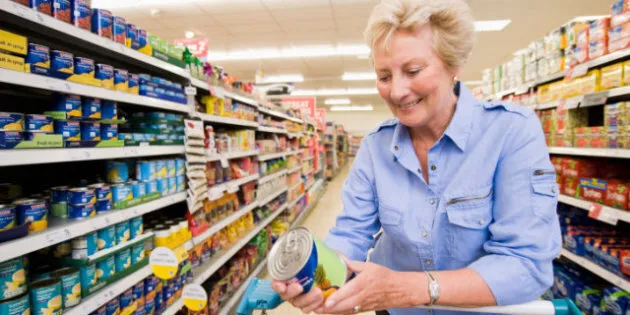
How often do you walk through your supermarket and read luring food labels that convince you that you're eating healthier with terms such as lower sodium, lower fat, reduced calories, omega-3s, "Lite", organic or natural? And that's only the beginning! Food manufacturers are jumping on the health bandwagon so you will purchase their products. These descriptions may be legally allowed, but often when you read between the lines you will find you're not getting the entire story.


Omega-3 Fatty Acids
Studies from these healthy fats show that they may reduce the risk of heart disease, stoke, cancer, arthritis and other autoimmune diseases. Some studies suggest you need about 3.5 grams daily. The best choices are one quarter cup walnuts, 3 oz salmon or 1 ½ tsp of flaxseed oil. So how about Omega eggs, Omega margarine or yogourt with Omegas? One kind, Naturegg, has 0.4 g, which would mean you would need to eat eight eggs daily. Probably not a wise choice. Becel Omega3 Plus margarine contains 0.6 g per 2 tsp. You'd need ½ cup daily! Don't think so! BioBest yogurt has 0.3 g per small container, but has 13 g of sugar which is equivalent to 3 tsp. Hmmm! That salmon looks a lot healthier!


"Light", "Lite"
How about "Light" or "Lite" oil? I always thought it meant lower in calories and fat. Nope! If you read the fine print, it can refer to colour, texture or flavour. Calories and fat can be identical to regular oil.


"Natural"
"Natural" is the new buzzword. Technically "natural" means a product does not contain artificial ingredients. But deli meat today is being called "natural" with reference to hot dogs, bacon, ham and sliced meat. There are no artificial ingredients but there is "celery extract," a natural food additive that contains nitrates, which become nitrites in food which has been linked to an increase of certain cancers. So is this misleading? I think so. These companies may be forced by the federal government to label that celery extract is a natural nitrite. At least the consumer can now make a more educated decision. Remember just because a food is natural doesn't make it healthy. And besides when have bacon, hot dogs and deli meat ever been considered healthy?


"Smart"
The most popular description has to be the word "smart." Smartfood Popcorn, Weight Watchers Smart Ones, Smart Fiesta Taco Kit, Smart Lunch, and Kraft Dinner Smart. Boy, if you eat all of these, you should have your I.Q. retested! Smartfood Popcorn has 270 calories, 16 g of fat and 400 mg sodium for three cups. A normal serving of popcorn is at least 8-10 cups. Weight Watchers Smart Ones -- Salisbury Steak may be lower in calories and fat but the 760 mg of sodium is half your day's intake and there are no significant vitamins or minerals. Kraft Dinner Smart has a half serving of vegetables in each portion, which comes out to about ¼ cup. Not very much! Also, one serving, which is ¾ cup, has over 400 mg of sodium, which is close to half a day's worth for kids. Smart Fiesta Taco Kit has palm oil as the second ingredient, which is a saturated fat, and the seasoning has hydrogenated soy bean oil, which is an unhealthy trans fat.

So hopefully some food label confusion has been cleared up. All you have to do is read between the lines and don't believe everything you see or taste!


Follow Rose Reisman on Twitter: www.twitter.com/@rosereisman

FOLLOW FOOD
 
 
  • Comments
  • 13
  • Pending Comments
  • 0
  • View FAQ
Comments are closed for this entry
View All
Favorites
Recency  | 
Popularity
This user has chosen to opt out of the Badges program
photo
11:59 AM on 03/06/2012
Will the free contraceptives have warnings on the label as well?
photo
HUFFPOST SUPER USER
MarilynBB
Marilyn Barnicke Belleghem M.Ed.
11:32 AM on 03/06/2012
"Sugar Free" products should say; "Artificially Sweetened" and the many names used to hide that fact should be exposed. "Sweetened with ..." would help.
10:47 AM on 03/06/2012
What really annoys me is the manufacturers' practice of shrinking the product instead of increasing the price, hoping people will not notice and think nothing has changed. Soap bars have shrunk, cereal boxes hold pitifully few bowls these days, etc. Being dishonest and trying to fool people only ticks them off. Personally I have quite buying the products of the worst offenders.
12:37 AM on 03/06/2012
Wow. Another serious, hard-hitting article filled with accurate information on Huffington Post Food. (/sarcasm)
Try again, and next time - write something useful for your readers. Just because American food consumers don't care about understanding food labels does not make the labels misleading. It makes the consumers lazy, or as this article contributes: confused by the large amount of misinformation being put out there by misleading food bloggers.
photo
HUFFPOST SUPER USER
Kevin Chung Lin
05:38 PM on 03/05/2012
just make the best choices possible and weigh your options
07:15 PM on 03/04/2012
Actually, 760mg of sodium is not half your day's intake unless you're on an extremely low-sodium diet (like DASH). It's really just 38% of the US RDA for sodium. Hedging the facts yourself while purporting to show how the nutrition labels are doing the same thing isn't quite cricket, is it?
11:35 PM on 03/04/2012
Actually, Brook, Ms. Reisman hails from Canada, where our government lists the daily amount as being from 1000 to 1500 mg daily. So you are correct. It's actually 50.7%

Although she would not likely recall me, I worked with Ms. Reisman a few years ago. She is quite a lovely lady and I can assure you that she is hardly the sort who would hedge the facts. She did her research. Can you claim the same thing?
06:33 AM on 03/05/2012
Yes, I can claim that--because I'm not required to investigate Canadian government standards. (It would hardly be necessary for me to investigate whether or not the writer is Canadian. On the other hand, I did miss 'flavour' and that the link went to '.ca' instead of '.com.')

I have done the research on sodium according to US standards, because I have dilated cardio-myopathy and a low-sodium lifestyle is now mine to enjoy. I just got out of the hospital with renal failure caused by the drugs used to treat my heart condition. While I'm not a registered dietitian, I spent half of February in the hospital being counseled by dietitians on low sodium and low potassium diets.
photo
urkiddinme
Former fatty turned fitness freak
03:12 PM on 03/04/2012
One rule of thumb: if it shouts buzzwords on its label, don't buy it. To put a finer point on it, if it *has* a label, don't buy it.
12:43 PM on 03/04/2012
That's why you just have to avoid the middle aisles of the supermarket or become a pro at reading the ingredients list! Stores stock what sells and what sells usually has cleaver 'come ons'. Circle the periphery of the store, fill your cart from there and only dash down the center aisles for specific items you know you can trust. Not only is is healthier http://www.drbaileyskincare.com/blog/the-best-diet-for-healthy-skin-in-2012/ but you'll save a ton of money too - all that seductive processed food is expensive and should not form the foundation of your diet. Great 'head up' post, we need to keep talking about this.
12:40 PM on 03/04/2012
That's why you just have to avoid the middle aisles of the supermarket or become a pro at reading the ingredients list! Stores stock what sells and what sells usually has cleaver 'come ons'. Circle the periphery of the store, fill your cart from there and only dash down the center aisles for specific items you know you can trust. Not only is is healthier http://www.drbaileyskincare.com/blog/the-best-diet-for-healthy-skin-in-2012/ but you'll save a ton of money too - all that seductive processed food is expensive and should not form the foundation of your diet. Great 'head up' post, we need to keep talking about this.