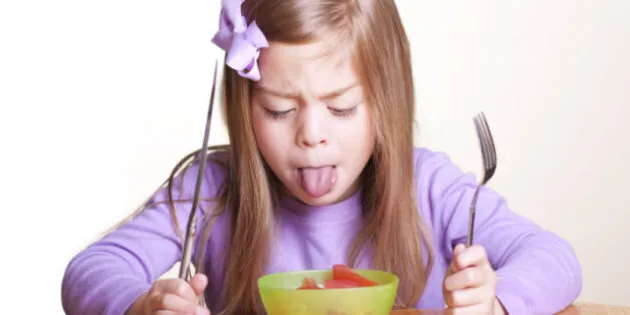
Though turkey, stuffing and mashed potatoes usually get top billing, most people would agree Thanksgiving's really about saying thank you.
As Canadians, we're supposed to be better at it than most, being notoriously polite citizens and all. But it can be challenging if your child doesn't seem interested in social niceties. How can you help your kid become someone who knows how to say "please" and "thank you" if they would rather burp the alphabet at the dinner table?
Parenting expert Judy Arnall, author of Discipline Without Distress, says the old stand-by -- parental modelling -- works best with younger children.
"You don't actively teach it, they just pick it up from the adults in their lives," she says. "Whether they're in a restaurant or a 7-11, kids are watching how parents act, and if the server drops off a plate and parents say thank you, kids are more likely to be polite too."
It may seem simplistic, but it's easy to forget "please" and "thank you" on a hectic day, especially with your mate or your children. Arnall says it's also important to let kids know being polite can really benefit them, in terms of how others see them.
"Kids need to be taught assertiveness, but assertiveness with politeness will really get them far in life. Those are skills they need to learn as they're growing up," she said.
Social worker Joe Rich, CityLine guest therapist and author of Parenting: The Long Journey, says developmentally, until the age of six or so, children aren't going to "get" the concept of why it's important to be polite.
"From birth to about age six, you're simply teaching them to say please and thank you -- it should be like brushing their teeth. They don't understand how a cavity works, but nonetheless they know they have to brush their teeth," he says.
"At around age six you can start teaching them saying please and thank you has a lot to do with how people see us -- If someone gives you a gift and you say, "Thank you," it makes them feel good and appreciated. So children can start to explore what we would really refer to broadly as empathy."
If your younger kids' impolite behaviour during family gatherings is making you want to crawl under your seat, Rich says there's a way to involve the whole family in their learning process.
"You can say, "We're so glad to be here for Thanksgiving, our five-year-old and seven-year-old are working on manners and being polite," it's such a great learning opportunity for them," he says, "And then you pretty much absolve yourself of everything."
Sometime around adolescence, says Rich, parents need to recognize that whether their child is polite or not is no longer a reflection on them as parents -- it's now up to the child to decide how they will present themselves to the world. But Rich says it can often be a tough thing for parents to do.
"We have to remind ourselves this is her life, this is how she is allowing others to perceive her," he says. "I have to have faith people know I did the best job I possibly could and now this is in her hands."
Rich says it's helpful for parents to (calmly and privately) let an impolite teen know not saying thank you could affect how people see them. But he says nagging a teen constantly during social situations is the wrong way to go about it and won't work anyway.
"[Telling your kids to be] polite is one of the places people can embarrass their children publicly," he says. "If your child doesn't say thank you, the constant, "Say thank you! Say thank you!" can be embarrassing or humiliating."
And if, after all your best efforts, your teenaged son or daughter still says, "Pass the potatoes," without even the hint of a "please," you can rest-assured that it's not all your fault.
"The connection between well-behaved polite children and "Am I doing a good job as a parent?" -- we have to be careful with that," says Rich. "They're linked, but once [kids become] teens, you've done your job."
WATCH: