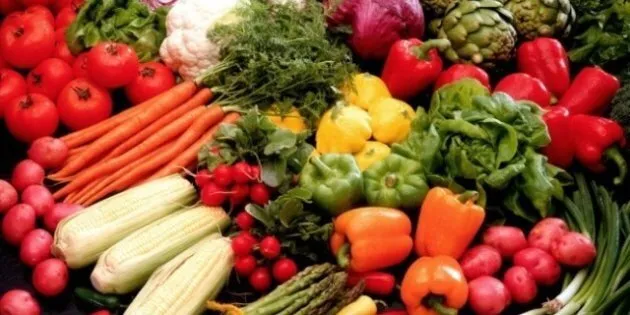
When I announced I was making the change over from vegetarian to vegan I got a lot of questions about my diet: Where will you get your protein? What about your iron? And B12? As with any dietary choice, whether omnivore or vegan, you need to be aware of your nutrient intake. So all of this started me thinking, where might I get these nutrients?
Where do you get your protein?
The plant world is full of a wide variety of nutritious and complete proteins! Here are some of my favorites:
• Hemp seeds -- Two tablespoons of hemp seeds can contain roughly 10 grams of high-quality plant-based protein. In addition to the protein, I believe hemp is a source of Omega 6 and Omega 3 fatty acids. Hemp protein is great in smoothies and hulled hemp seeds can be sprinkled on any salad or pasta dish.
• Chia Seeds -- I think Chia seeds are small but mighty! Chia seeds can contain complete proteins and Omega fatty acids. Chia seeds can be added to smoothies and they also make great pudding! (http://thehealthyherbivore.com/2011/07/08/raw-chocolate-chia-hemp-pudding/)
• Quinoa -- This nutty grain contains protein and can be used in a variety of ways. You can eat it for breakfast in place of oatmeal, use it as a base for stir-fry and you can even puff it and eat it like popcorn.
These foods, among others, can increase your protein intake. What about iron?
• Spinach -- I think spinach is a powerhouse when it comes to iron. One cup of spinach can contain around 6.4 mg of iron. I believe two cups of spinach is a good addition to a salad.
• Pumpkin seeds -- This small but nutritious seed can contain roughly 4.2 mg of iron per 1 ounce. Try pumpkin seed butter on toast with some cinnamon and agave. Pumpkin seed butter is a flavorful thickening agent for sauces as well. In this recipe simply replace almond butter with pumpkin seed butter and viola!
• Lentils -- Lentils are an extremely versatile bean and contain 7.5 mg of iron per cup. I like to cook a batch of lentils and store in the fridge to toss with salads or wild rice pasta.
Now what about B12?
• Nutritional yeast -- Nutritional yeast has a cheesy flavor and can be added to any sauce, pasta dish, or side of veggies. It's also a great topper for popcorn! Two rounded teaspoons of high-quality nutritional yeast can provide 2.4 micrograms of B12.
• Cultured and fermented foods -- I believe foods such as tempeh and miso are good sources of B12. Not sure what to do with your tempeh? Try this recipe for tempeh crusted steaks!
• Dulse -- Dulse is a red seaweed that grows on rocks. Dulse is one of the few sea vegetables that contains what I believe to be the proper bioavailable analogue of B12. Three grams of dulse can contain .39 micrograms of B12. There are a few ways to get dulse into your diet. I like to buy it in flake form and add it to smoothies and sauces. It is also great in vegan Ceasar salad dressing!
The foods I've listed are some of the sources for these nutrients however there is protein, iron, and B12 in many other foods in a plant based diet as well. By eating a wide variety of foods, and including the ones listed above, you can be a happy, healthy herbivore!
Follow Candice Schreiber on Twitter: www.twitter.com/HlthyHerbivore
Bill Clinton declares vegan victory
The one item is spinach, but kale (which I grow alongside chard) has a higher nutritional value.
And I've never been in a store that didn't carry lentils.
The foods you mention, as well as nutritional yeast that hasn't been artificially fortified with B12, may in some cases contain B12 analogues, but that's not the same as containing B12 in a form which the human body can actually utilize. B12 deficiency is NOT, I repeat NOT, something you want to play around with.
If you're going to be vegan, you need to do one or more of the following:
1) Supplement with B12 in pill or liquid form;
2) Eat B12-supplemented foods, like fortified cereal or fortified dairy alternatives;
3) Take B12-supplemented nutritional yeast, such as Red Star's "Vegetarian Formula".
Even vegan organizations acknowledge the need for vegans to supplement with B12:
http://www.veganhealth.org/articles/vitaminb12
In retrospect I should have noted that your Nutritional Yeast needs to be fortified and eating fortified foods is necessary. My apologies and thank you for the info!
Cheers!
"The only plant foods which have been tested for B12 activity using the gold standard of lowering MMA levels in humans are dried and raw nori from Japan. Dried nori made MMA status worse, indicating that it can reduce B12 status and can possibly harm people who are B12-deficient. Raw nori kept MMA levels about the same, indicating that it didn't harm B12 status, but it did not help either.
. . . [O]nly tempeh in Indonesia or Thailand, dulse, Chlorella, raw nori, Aphanizomenon flos-aquae, and coccolithophorid algae warrant much further attention for providing B12. Unless these foods are shown consistently to correct B12 deficiency, VEGANS SHOULD NOT RELY ON THEM AS A B12 SOURCE [emphasis added]".
Additionally, despite claims that unwashed organic produce can contain B12 from surface bacterial activity, the article goes on to state: "Unless uncleaned, organic produce is shown to lower MMA levels, it is unjustified to claim that B12 can be obtained in such a manner, or to claim with certainty that humans have ever relied on it as a source of B12".
And, as the article astutely notes, "The vegan movement is typically not aiming for a world where there are enough cows to produce a significant amount of manure for fertilizer".
When you cite sources to back up your claims, it's a good idea to make sure that they actually agree with what you're saying!
As a side note, I like tempeh. I like to crisp up some tempeh and use it as a topping on salads, and I like to throw a teaspoon of hacho miso paste into soups, stews, etc.
I just don't kid myself that I'm getting bioavailable B12 from any of these items.
(Disclaimer: I'm not a vegan, so I get my B12 from animal products. But I have friends who are (vegan, that is, not animal products LOL!!), and I want them to live long and healthy lives, too.)
Cheers
Also, not only is the non-heme iron found in plants harder to absorb, leafy green vegetables, lentils and grains actually interfere with the absorption of iron and other minerals.
I also realize non heme iron is harder to assimilate which is why Vegans need to make sure they are eating an abundance of Iron containing foods along with foods that make it easily absorbable such as foods high in Vitamin C and avoid foods that are contain Phytates (like the ones you have listed there). As with any dietary choice, omnivore or vegan, you just have to be aware of your nutrients.
Cheers!
The point is, to be vegetarian is a philosophical choice, not a scientific one.
Ranveig Elvebakk, MD Author of "The Food Tree" and "A New Disease Model"
It is very possible (and "scientific") to eat a healthy, balanced vegan or vegetarian diet, but it takes some effort to read up on foods, buy fresh produce in season, and prepare it- more effort than stopping for a cheeseburger supersize meal, but not more effort than eating a healthy animal-based diet. Those of us who choose to eat this way usually find that effort worth it.
"I believe hemp is a source of Omega 6 and Omega 3 fatty acids"
"I think spinach is a powerhouse when it comes to iron"
So... do you "believe" and "think" these things are healthy, or did you read the research and "know" these things to be true?
http://www.whfoods.com/
The Encyclopaedia of Healing Foods (Michael Murray, ND)
Nutrition: Concepts & Controversies (Sizer FS, Whitney E, Piche LA. 2009)
Principles of Biochemistry (Horton, 4th Edition)
Role of essential fatty acids in the function of the developing nervous system (Uauy R, Peirano P, Hoffman D, Mena P, Birch D, Birch E.)
Sorry for the confusion. I can assure you any information given is backed with research.
Cheers!
Candice
http://vndpg.org/articles/Iron-and-Zinc-Bioavailability-in-Vegetarian-Nutrition.php