It took a month, but when the Harper government moved to respond to the crisis in Attawapiskat, they moved fast. Stephen Harper made his move on Monday Nov. 28, a month to the day since a state of emergency had been declared in the impoverished northern community. He made his move just as the cargo plane carrying emergency supplies from the Red Cross was touching down in Attawapiskat. I was standing on the tarmac watching the relief plane taxi to a standstill, the fading northern sun turning the snow a dark blue. Shivering on the tarmac beside me was our national leader, Nycole Turmel, Red Cross volunteers and a long line of media cameras and journalists.
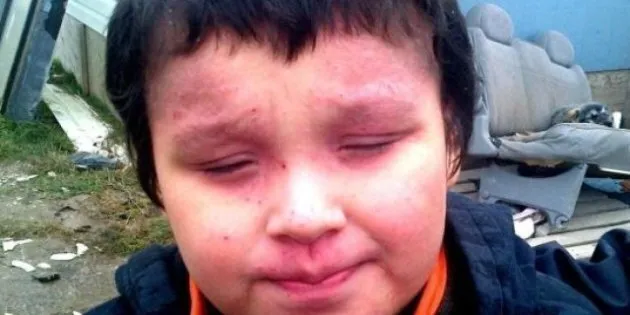
The crisis in Attawapiskat had been going on for weeks with barely a notice of concern from the federal government. But then the Huffington Post published footage and an article I wrote on the desperate conditions in the community. Almost overnight the story went viral. The images of families living in sheds and tents without running water or toilets appalled the nation.
The response drew Canada's Red Cross to intervene with a disaster management team. And now as their plane hit the ground, it seemed as if this could be the game changer moment. But as the cargo bays opened and the mundane task of unloading sleeping bags and heaters began, the Harper government decided to make their own game-changing play.
In the stately splendor of Canada's Parliament, Stephen Harper stood up and announced that he wanted to know what happened to all the money his government had given Attawapiskat. We have paid $50,000 to "every man, woman and child in the community," he fumed, and where has it gone?
Value for money, taxpayer dollars, Indians, mismanagement. It was the dog whistle that rang out loud and clear for the Harper base across the country. The sentiment had been there all along - on talk radio, on the vitriolic comments being left on the comments section of every online article about Attawapiskat. But now, the master of the black arts of politics conjured up this simmering sentiment and cast it onto the national stage.
Within a day, the media coverage turned from humanitarian relief to a full out national exercise in a forensic investigation of the behavior of a desperately poor community. Where did the money go? Why was the Band hiding its finances? Why, questioned one reporter on national television, was such a poor community even "allowed" to have a hockey arena?
It did little to explain that the Band's financial statements were posted online. Or to point out that $50,000 per person divided over six years, works out to about $8,300 per person per year, less than 50% of what is spent on Non-Native people. Or that 80% of this funding is allocated for education, 10% for social programs, leaving a paltry 10% to maintain housing and deal with infrastructure.
All of this could be explained, but as one veteran politico used to tell me, "in politics when you're 'splaining, you're losing."
As the humanitarian story stumbled momentarily on questions of accounting, Harper stuck the knife home. He deposed the elected Band Council, blaming them for the problems in the community. If any victim could be found in this whole affair it was the government. As Minister John Duncan opined, "If the Department (of Indian Affairs) is guilty of anything, it is extreme patience."
Band council deposed. State of emergency ended. In terms of tactics, Harper had grabbed the ball and tried to move it up the field. His big problem was that his point man Duncan continued to fumble under the media glare.
And yet, the bigger question remains - now that Minister Duncan has assumed control of the community -- what is going to be done to secure a long-term housing plan? There are 26 families or individuals living in sheds and tents. There are 90 people housed in substandard construction trailer. There are another 120 families living with relatives in mould-infested homes.
Does anyone really believe that imposing a third-party manager is the first step towards a rebuilding of this shattered community?
So far the only response from Minister Duncan is to assure Canadians the homeless are being moved to the hockey arena. As media stories percolated with salacious gossip about who was sleeping with whom in the Band administration, the 'solution' of housing people in a barely heated arena without showers or adequate cooking facilities has been given little scrutiny.
But this "plan" is not being overlooked by people in Attawapiskat.
"They are putting us in the arena and then they're going to leave," said one Attawapiskat resident. "I guess this is the Native people's Katrina moment."
Attawapiskat is Canada's Katrina moment. The bumbling inaction from Minister John Duncan certainly resembles the Bush government and the FEMA response. But on a more symbolic level, Harper's response to Attawapiskat exposes an ugly, underlying racial divide, just as the indifference to the Black population in flooded New Orleans tarnished the American reputation internationally.
Attawapiskat is certainly not on the scale of Katrina. But Attawapiskat is the tip of the iceberg for the numerous Bantustan-style homelands of the far north. Years of chronic under funding and bureaucratic indifference has created a Haiti north where dying in slow motion on ice-filled shantytown is considered the norm.
Over the last week I have done extensive interviews where the suffering of people on the ground has not been mentioned once. Where is the money? Why are we spending money? Shouldn't these people have taken some responsibility? These are questions that would never be asked of farm families living on a flood plain or a community caught out by a forest fire.
Throughout this time, my thoughts return to Attawapiskat. They are hopeful, wonderful people. They are self-reliant. I have been to their celebrations and their funerals. But they don't share their frustrations or their hurts very easily. With outsiders. Last week I stood in minus 20C weather in an unheated shack where a young couple was so poor they didn't have blankets.
The woman stone-facedly answered question after question from national media; about living in a home with no heat; about her husband who spat up blood when he tried to cut firewood; about her dream of having a place to put some nice little mementos and the dream of being able to wash her dishes.
And then the media asked her about her children. She remained stone-faced for a moment as she described how they had been taken away from her and shipped to foster homes hundreds of kilometres away because, as a mother living in a shed, she couldn't take care of them. That was five years ago. And then she started to weep - deep, painful, gut wrenching weeping. Rachel crying for her children because they were no more.
Attawapiskat has been a moment when we see our nation as something less than we thought it was. But I believe Canadians want us to restore the promise of this great nation. All across this country, school groups and individuals continue to organize fundraising drives. The Red Cross continues to deal with the catastrophe. The world continues to watch.
And as for the people in Attawapiskat, one Band member summed it up -- there is no going back for us. We can only go forward. It's a message for all Canadians.
Here is our new video
(Warning: Graphic images)
