Featuring fresh takes and real-time analysis from HuffPost's signature lineup of contributors
Christopher Sands

GET UPDATES FROM Christopher Sands
 

Why Can't We Build Great Projects Anymore?

Posted: 12/13/11 02:30 PM ET

Have you noticed how difficult it is to build "shovel ready" public infrastructure these days?

The new bridge between Detroit and Windsor is caught up in local Michigan politics, not being built.

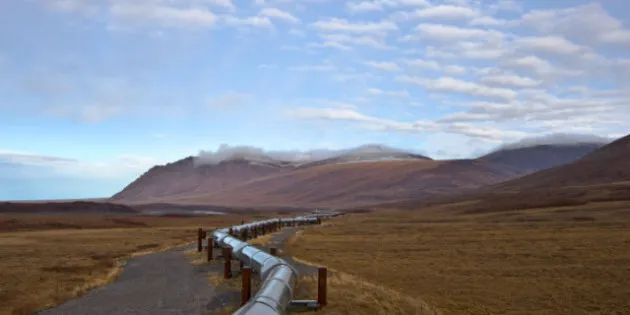
The Keystone XL pipeline is caught up in Nebraska politics and presidential politics, not being built.

Canadian projects to generate more hydroelectricity in Manitoba, Quebec, and Newfoundland to export to the United States offer the potential for greener power to replace coal-fired generation sound great. But powerlines to carry this energy beyond the border states are not being built.

Roads and railways are aging infrastructure too, and carry most North American trade. Historically, most of our highways and rail lines connect east and west. Our north-south capacity is catching up, but not enough is being built.

For many of these projects, the problem is not funding or engineering, but permitting. In the United States federal, state, county, and municipal governments have overlapping jurisdictions and infrastructure projects require approval from each government. Permits may be required for design, safety, environmental impact, zoning, construction, and more.

Add to this the necessary approvals of public funding, and infrastructure projects can take decades from conception to completion.

MSNBC host Rachel Maddow reminds us that it takes a great country to build a great project like the Hoover Dam. What does it say that the United States can no longer get big projects -- or even small ones -- underway?

One thing it says is that the United States takes its democracy seriously.

Public input and expert testimony on infrastructure projects, given before elected or citizen boards and committees, rarely produces consensus but often results in better decision making.

If the process needs changing, it shouldn't be changed to eliminate public input -- even if not-in-my-back-yard (NIMBY) types seem to oppose everything without regard for the greater good.

This is a serious problem for the North American political economy, pitting democratic politics against economic growth. If we don't build infrastructure in the United States, not only will the U.S. gradually lose competitiveness as logistics costs rise due to its overloaded infrastructure, but Canada and Mexico will each face difficulty getting products and services into the U.S. market, hurting their growth as well.

Trading partners in Asia and Europe, by contrast, will take advantage of the east-west infrastructure already in place as long as they can; they'll face constraints, too, but Canada and Mexico suffer sooner.

There might be a way to resolve this dilemma, using a model from our past: the International Joint Commission, or IJC.

Back in 1909, leaders in Canada and the United States faced a mounting pile of complaints, concerns and conflicts at their shared border, from water rights to land use. Too often, resolving these disputes to the satisfaction of the agitated local communities affected was impossible because of tensions between the United States and Great Britain, which had sovereign authority over Canada.

In response, the United States and Canada established the IJC, an apolitical panel made up of three individuals from each country, with a small staff. The IJC can act only when it is asked to by the State Department and Canada's Foreign Minister through a formal "reference" of a mutual problem to the body.

The IJC acts on the reference to study a problem, hold public hearings to gather opinions from experts and the general public in both countries, and eventually to prepare a technical report with recommendations to the two federal governments. The IJC does not have the authority to decide anything -- that authority remains with the sovereign governments. But by stepping away from partisan politics and immersing themselves in technical details, the IJC offers the governments sound advice on how to proceed.

The IJC is now more than 100 years old. It has successfully addressed a number of environmental problems associated with the Great Lakes and our shared environment.

So, why not take this model and establish a North American Infrastructure Planning Commission?

An equal number of representatives of the three federal governments could consider scientific and engineering evidence and select among various proposals for where to locate infrastructure, and what the environmental and public safety impact of the infrastructure might be. Simply by co-ordination data gathering (soil samples, maps, etc.) to support permitting decisions by governments, a continental infrastructure planning commission could expedite approval processes.

The answer to the economic infrastructure dilemma posed by so much U.S. democracy may be more democracy, and a new process that gives weight to expert advice and the views of Canadians and Mexicans, too.

Something must be done soon to allow a great country to build great projects again, and keep North America competitive with Asia and Europe.


Follow Christopher Sands on Twitter: www.twitter.com/sandsathudson

Have you noticed how difficult it is to build "shovel ready" public infrastructure these days? The new bridge between Detroit and Windsor is caught up in local Michigan politics, not being built. Th...
 
 
  • Comments
  • 10
  • Pending Comments
  • 0
  • View FAQ
Comments are closed for this entry
View All
Favorites
Recency  | 
Popularity
06:19 PM on 12/17/2011
You are reaping what you sowed. You can't have Great Project and smaller government. The Republican party cut taxes and spent money on war so there is no money for Great Government Projects. The cost to help all those solders that honorably did as they were asked but were damaged in the process by a government trying to fight two wars on the cheap instead of to win and come home is going to be a very big bill for a long time. That 800 billion spent in Iraq was the Republicans Great Project. Afghanistan is also a Great Project not being paid for. No funds for Great Projects when the people with money don't pay taxes and the unemployed don't have income to tax.
photo
HUFFPOST SUPER USER
Aesops
Appearances often are deceiving
10:11 PM on 12/16/2011
You're broke. To build great projects, you need savings, and there are none in your society. When people stop buying new cars every 3 years and flat screens on credit and we save for 20 years, maybe those "great" projects can happen. Btw, what exactly is a "great" project? An expensive project? Shouldn't we actually notice a need for something and worry about its "greatness" later with respect to funding? The Three Gorges Dam was a great project and flooded thousands of people out of their homes.
photo
HUFFPOST SUPER USER
Aesops
Appearances often are deceiving
10:05 PM on 12/16/2011
Because you're f'ing broke! And by the way, since when did building "great projects" mean that a society was successful? The big project is often the last thing you see from a formerly productive nation, because it is years of savings that make those projects even viable. Let's start at the beginning, by meeting real needs in society like raising savings rates and ceasing to buy new cars ever 3 years.
09:23 PM on 12/14/2011
I agree with your conclusion to establish a North American Infrastructure Planning Commission except for the part about making it tri-lateral. Have two commissions, one for the Northern border and one for the Southern border as one shoe will not fit three feet, one shoe will fit two feet though.
photo
HUFFPOST SUPER USER
Warren Yuill
Jesus Built My Hot-Rod
05:14 PM on 12/14/2011
Corruption. Thats the big problem. Lawmakers in the states get elected owing so much money they can't even begin to consider voting their conscience.
04:49 PM on 12/14/2011
Why Can't We Build Great Projects Anymore?

Oh, IRS, EPA,OSHA,EEOC just to name a few.
Realist2011
beware false profits....
01:00 PM on 12/14/2011
Perhaps part of the problem is that some of the "Great" projects really aren't so great. Two that you mentioned are completely different issues.

I don't know that much about the bridge, but apparently the issue has a great deal to do with "profits". I've never known a bridge of that importance being privately owned. So the corporation that owns it doesn't want competition. If everybody else can agree on the new bridge then build it, and don't worry about the corporation's desires not to have competition. Just greed.

As to the pipeline, that's a completely different matter. Typically "Great" projects have great benefits. If the benefits fall from Great, to pretty much no benefit, then there's really no reason to build the pipeline.

So you have two projects in your article. One that some people don't want built because of greed (the bridge) and the other they want specifically built solely because of greed (pipeline with no benefits).

Maybe this indicates the real reason then as to why "Great" projects aren't being built.
photo
HUFFPOST SUPER USER
Tony frm Banff
Search for truth,not spin
11:35 AM on 12/14/2011
Well here we go,we have this senior fellow from the Hudson Institute,aka:a vast network of psuedo-conservative organizations which serve as fronts for the New World Order, trying to persuade public opinion under the guise of public infrastructure for the X.L.Pipeline. What this senior fellow does not explain is that the pipeline is not infastructure for the greater PUBLIC good. This pipeline will only serve the interests of big oil, as they pass the COSTS onto us the PUBLIC! Yes the oil is needed, but at what costs to the enviroment and economic good to the public. How can anything that could and most possibly will be a disaster waiting to happen as raw Bitumen is pumped through pipelines at enormous pressures on a 2500 mile journey to the Gulf Coast of Texas.
Do not forget this Hudson Institute does not have your interests a heart. This Hudson Institute makes recomendations only to businesses and Governments on how to sway PUBLIC OPINION.
They do not have your interests in mind no matter how hard they try to sugar coat it.
04:50 PM on 12/14/2011
WOW.
That's one heck of a cartoon you have running in your head.
photo
HUFFPOST SUPER USER
Aesops
Appearances often are deceiving
10:16 PM on 12/16/2011
Maybe you should describe the cartoon running in your head. Then we can see which one is more plausible.