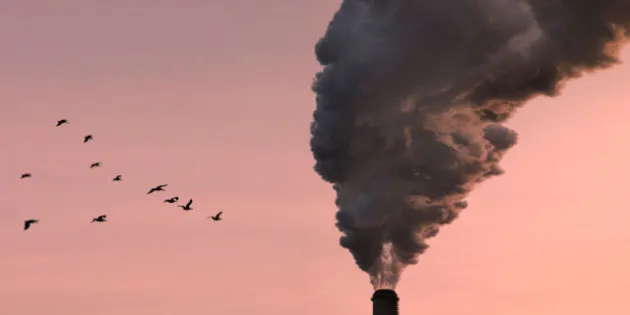
You'd think most of us would have a knee-jerk instinct to protect Earth; good planets are hard to come by.
If the Earth were in distress, say, heating up to dangerous temperatures, the public would band together. We'd all scrutinize the problem to help climate scientists and environment ministers find a solution... wouldn't we?
Many people wouldn't. In fact, when the issues are really complicated, some would avoid the crisis altogether.
New research has found that the less Canadians know about complex issues-- the economy, energy, and the environment-- the more they avoid becoming well informed about them. This willful ignorance is associated with a "chain reaction" of dependence on governments to solve the problem, especially if it is urgent.
The American Psychological Association surveyed 511 adults in Canada and the U.S. in a series of five studies to discover more about the "'ignorance is bliss' approach to social issues."
In one study, those who felt most at risk in the face of a recession were more likely to avoid literature that challenged the government's ability to manage the economy.
Staying ill-informed "is an ideal way to protect the psychologically comfortable (even if inaccurate) belief that the government is taking care of the problem," state the authors, who cited Al Gore's An Inconvenient Truth.
Gore's truth and his 2006 documentary were ill-received by some American parents, who wanted it banned from schools, calling its bleak portrayal of global warming "propagandist."
The authors of the study note that this tendency to avoid threatening information about complex issues is called "motivated avoidance."
Imagine the consequences for someone worried about an energy crisis. They'll gloss over headlines heralding peak oil instead of reading more. Unless you're a banker or an economist, it's doubtful you've looked up the specs on subprime mortgages.
We'd hate to think that a fear of ozone depletion might actually prevent someone from learning more about chlorofluorocarbons, hydrochlorofluorocarbons, carbon tetrachloride, and methyl chloroform. We encounter the effects of climate change in our travels to regions where global warming could mean more than just fewer snow days. It could mean drought. Famine.
And as for our reliance on politicians: Following the recent UN conference in Durban, Canada announced its intention to withdraw from the Kyoto Protocol, which has made us climate pariahs. Most Canadians can't imagine being loathed by much of the world for our government's stance on binding CO2 emissions caps, so this seems like an opportune time for Canadians to become more informed.
But that presents another problem. Where will Canadians, already prone to avoiding negative stories, turn for information?
For a long time, while the Earth heated under our feet, everyone was at a loss as to how to talk about climate change. Newspapers gave equal editorial weight to theories about carbon emissions as culprit, which has been the consensus among scientists for longer than you may think, as they did to alternative theories. It was a case of fair and balanced reporting gone extreme -- scientists in one corner, deniers in another.
Without a thorough understanding of the problem, neither the public nor politicians could muster a solution.
Collectively, we couldn't agree on whether climate change was a man-made problem; whether it was the responsibility of governments to impose carbon taxes; whether it was up to the market to adapt or consumers to demand.
And maybe, the more amorphous climate fear became, the deeper heads buried in the sand. And all the more trust was instilled in politicians.
But politicians spin science to suit their agenda. Barack Obama hung part of his 2008 presidential campaign on rhetoric about "bringing science back" into the U.S. administration, something he claimed his predecessor George Bush had quietly vanquished.
Canada's Parliament isn't much better. During Question Period, on the topic of the ozone, NDP Environment Critic Megan Leslie recently challenged a Tory minister with: "When will this government realize that science is real?"
If politicians won't discuss science without resorting to criticism of their opponents, what is the public supposed to believe about scientific issues with social consequences?
The International Energy Association, a group tasked with tracking energy consumption and advising industrialized nations of the consequences recently found that rising fossil fuel use will lead to "irreversible and potentially catastrophic climate change."
In October, Environment Canada announced the discovery of an "unprecedented" hole in the ozone, about twice the size of Ontario, above Canada's Arctic. Ice on our northern lakes is thinning, threatening both hunting patterns and the cultural survival of First Nations and Aboriginal communities.
Climate science is complicated and scary, fair enough: but our contributions don't have to be. Even a child can start by learning how much energy we save annually by turning off a light switch, or get permission to watch An Inconvenient Truth. Informed newspaper readers can work their way up to learning more about methyl chloroform.
Despite risks to our psychological comfort, we hope that a fear of climate catastrophe will motivate action, not avoidance.
Follow Craig and Marc Kielburger on Twitter: www.twitter.com/craigkielburger
Brian Merchant: The Greedy Bastards Antidote to Rigged Energy
Climate Change and the Environment
Impact of climate change on agriculture
Climate Panel Needs to Follow its Own Advice
Philippines disaster may have been worsened by climate change, deforestation
http://www.mcclatchydc.com/2011/12/26/134128/book-examines-americas-turn-from.html#storylink=cpy
Abstract The Medieval Warm Period is an interval of purportedly warm climate
during the early part of the past millennium. The duration, areal extent, and even
existence of theMedieval Warm Period have been debated; in some areas the climate
of this interval appears to have been affected more by changes in precipitation than in
temperature. Here, we provide new evidence showing that several glaciers in western
North America advanced during Medieval time and that some glaciers achieved
extents similar to those at the peak of the Little Ice Age, many hundred years later.
The advances cannot be reconciled with a climate similar to that of the twentieth century,
which has been argued to be an analog, and likely were the result of increased
winter precipitation due to prolonged La Niña-like conditions that, in turn, may be
linked to elevated solar activity. Changes in solar output may initiate a response
in the tropical Pacific that directly impacts the El Niño/Southern Oscillation and
associated North Pacific teleconnections
Johannes Koch and John J. Clague, Extensive glaciers in northwest North America during Medieval time, Climatic Change (2011) 107:593–613, DOI 10.1007/s10584-010-0016-2
AGW = 'Medieval witch-hunters': 'In the Dark Ages, before man enlightened himself, witches were frequently hunted & burned on the basis that they were causing climate change'
http://www.abc.net.au/unleashed/3747368.html
M.A. Solaria
F. Hervéa
J.P. Le Rouxa
A. Airob
A.N. Sialc
What are you pulling this time Orkney?
Real scientists here will instantly recognize the problem here.
The more I read her screed, the more I realize that she doesn't know what she is posting about.
And now this....
Having said that, the article is only available if you have an El Sevier password or you purchase it, so who knows what the article says. Without being able to read the article I personally wouldn't have much to say about it except that it is based on one lake and one proxy.
Standard Orkney wallpaper job. Disrupts Huffpost (her objective) and gives the illusion that Orkney is saying something.
Was hoping to get an Orkney comment on this Dallas.
I predict that we will see more similar clutching of straws by denialists as the days go on.
Let's have a hand for Gallon! Great eye for detail!
The surface temperature changes for the last 4000 years in northern inland Iberia (an area particularly sensitive to climate change) are determined by a high resolution study of carbon stable isotope records of stalagmites from three caves (Kaite, Cueva del Cobre, and Cueva Mayor) separated several tens of kilometers away in N Spain. Despite the local conditions of each cave, the isotopic series show a good overall coherence, and resulted to be strongly sensitive to surface temperature changes.
Remarkably, the presented records allow direct comparison of recent warming with former warm intervals such as the Roman or the Medieval periods. That comparison reveals the 20th century as the time with highest surface temperatures of the last 4000 years for the studied area.
Martin-Chivelet J., Munoz-Garcia M.B., Edwards R.L., Turrero M.J., Ortega A.I., Land surface temperature changes in Northern Iberia since 4000yrBP, based on δ13C of speleothems
(2011) Global and Planetary Change, 77 (1-2), pp. 1-12.
Paleoclimatic significance of lacustrine microbialites: A stable isotope case study of two lakes at Torres del Paine, southern Chile
M.A. Solaria, , , F. Hervéa, J.P. Le Rouxa, A. Airob, A.N. Sialc
Abstract
Two Patagonian lakes studied here, Lago Sarmiento and Laguna Amarga, are located within the orographic rain shadow formed to the east of the Southern Patagonian Ice Field in the Andes Range. Major thrombolite colonies are present in Lago Sarmiento, whereas widespread stromatolites occur in Laguna Amarga. ..... Lago Sarmiento thrombolites contain unique carbonate mineral species in which carbonate precipitation occurs close to isotopic equilibrium and where the variation in water temperature controls fractionation of the stable oxygen isotope.
The results indicate that at 1215 cal yr Bp the level of the lake was at 85 m a.s.l with a temperature close to 9.3 °C, was at 82 m a.s.l. at 600 cal yr Bp with a temperature close to 8.5 °C. This coincides with the timing of the Northern Hemisphere Medieval Warming Period. At 183 cal yr Bp the level of the lake was at 80 m a.s.l with a cooler temperature close to 7.7 °C, representing a colder period coinciding with the timing of the Little Ice Age (LIA). ......
http://www.sciencedirect.com/science/article/pii/S0031018210004268
And that's not all ...
Paleoclimatologists used those upside down lake bottom rocks as a proxy to create cool looking hockey stick graphs.
http://tinyurl.com/82ersg9
The reason the MWP is so important is that its global nature and the fact that it was as least as warm as the Current Warm Period (CWP) if not warmer brings crashing down the feeble structure of the IPCC and their Rommulan operatives claims about the CWP.
The CWP is not un-precedented and not dangerous since the MWP was similar to today's gentle and hospitable warming and therefore within natural variation and of no danger to Gaia or Humanity
That is why the IPCC had to get rid of the MWP, as noted in sworn testimony to the US Congress.
http://www.youtube.com/watch?v=u1rj00BoItw
An image for those that prefer that method of demonstration.
http://tinyurl.com/7s2xwdm
A more detailed analysis
http://www.appinsys.com/GlobalWarming/UnprecedentedWarming.htm
Lavoisier turns over!
Carbon plus oxygen plus heat creates denial!
So therefore, it is in the best interests of the highest paid benefactors of fossil-fuelism to keep the public as poorly informed as possible!
Sweet. So when people hear “Clean Coal”, which is like saying “Clean Filth”, they are at once led to the belief that the problem has been “Cleaned Up” and that it is something that they don’t know anything about and that, truth be known, something that they really don’t want to know anything about it.
A frequent criticism has to do with claims about the fate of polar bears. But, in fact, loss of ice habitat will probably render the bears extinct. In short, AIT is about as accurate as documentaries get.
"The Day After Tomorrow" is not a documentary and neither Al Gore nor any climate scientist have anything to do with it. It is an entertainment piece based on a book called "The Coming Global Superstorm" by radio host Art Bell and science fiction writer Whitley Streiber.
The petro-denialist-industrialists mock us for our concern and meet our science with poorly documented anecdotes and outright falsehoods. They continually use industrial grade advertising psychology to sway the public, but the facts cannot be disputed.
Burning petro fuels releases tens of billions of tons of carbon dioxide, a heat trapping gas, every year now. This gas is critical to maintaining the earth’s temperature in the range that we are best adapted to live in. Mess with that level at your peril.
"They sow the wind and reap the whirlwind. The stalk has no head; it will produce no flour. Were it to yield grain, foreigners would swallow it up."
Exactly when those warm periods happened is not as relevant as the fact that they DID happen, and that in terms of geological time, were not that long ago.
Uh, no. Your argument is so free of logic that it is painful to read. Perhaps the glacier he was in has been steadily growing until the industrial age.
“Exactly when those warm periods happened is not as relevant as the fact that they DID happen, and that in terms of geological time, were not that long ago.”
Could you be any more scientifically imprecise? Probably. I just hope I don't have to read it.
But you knew that, right?
However, the MWP deniers, such as the IPCC, US EPA, and UK’s MET Office, will never admit the MWP was similar to today because it means that CAGW is exposed for the steaming pile of junk science that it truly is.
In total, climate change is complex and not well understood.
Since the world was just as warm in the past when CO2 levels were significantly lower CO2 cannot be the major driver of Gaia's temperature.
Our current wonderful warming period has powered the social and industrial advances that have made modern people the healthiest and most prosperous in history. MWP deniers want us to believe that plant friendly and life giving CO2 is a bad thing to better advance their meglomanical desire to both boss around the developed world and further impoverish the poor while pocketing a lot of taxpayer money along the way.
Useless, misguided attempts to control carbon are not the answer to the ever changing climate. There is only one answer to changes in climate that has ever worked for humanity.
That is adaptation.
One of the many links to the overwhelming Paleoclimate evidence of the global nature of the MWP is below.
http://www.co2science.org/data/mwp/mwpp.php
I'd be interested to see this "overwhelming paleoclimate evidence" for a Minoan warm period. AFAIK, there have been no climate reconstructions that go back to that time (about 3500 years ago.) And there certainly is no historical evidence. The documents in the Minoan language, are basically commercial records and say nothing about climate. Around the world, nearly all societies were preliterate.
A look through the denialist literature shows that the Minoan warm period claims are based on somebody's alleged analysis of Vostok ice core samples. Ice cores can tell us about CO2 concentrations and about local temps, but very little about worldwide temps. As Vostok is in Antarctica, I'm pretty sure that analysis of ice cores would show that it was pretty cold there 3500 years ago because, you know, ice core...
The so-called evidence for a Roman warm period has to do with comments made in ancient literature about cultivation of certain plants, mainly grapes, in northerly regions. But cultivation is also influenced by things like the relative cost of growing wine grapes vs importing wine. Also, what is a grape? Could sources be referring to other wine producing berries? Roman society encompassed a relatively small slice of the world so you can't really say anything about global climate. And, there is no evidence that it was warmer then, anyway.
In fact, such general climate reconstructions as have been done are focussed on the Northern Hemisphere and have shown a warm period during that time (roughly 1000 to 1350 AD) but show MWP temps to be lower than today's. There is simply no evidence that the MWP was as warm as or warmer than today or that it was a global phenomenon. That's not because scientists don't like the MWP. It's simply what the evidence says.
You seem to believe that a warmer MWP would somehow disprove the warming trend today. It wouldn't. The measured global warming today is pretty conclusively linked to CO2. Such medieval warming as existed would be caused by a different mechanism.
Yes the ice core records show the Minoan Warming, but your claim that they are the only paleo records showing it reveals the depth of your self-admitting ignorance. There are dozens of other paleo studies that also reveal it
Here's a link to a discussion of a peer-reviewed paper about Arctic Sea Ice extent that clearly shows the Minoan warming.
http://tinyurl.com/7k8kchk
Evidence for the Roman warm period and the Medieval Warm period are discussed in the same article. Here's another essay about a peer reviewed study from China that clearly shows the Roman Warming and the MWP.
http://tinyurl.com/c9udywf
The link I provided previously shows the paloeclimate reconstructions from around the globe, not just the Northern Hemisphere. The nail in the coffin for the MWP deniers are the paleo records from Antarctica and New Zealand.
http://arxiv.org/PS_cache/arxiv/pdf/0707/0707.1161v4.pdf
International Journal of Modern Physics
B, Vol. 23, No. 3 (2009) 275{364 , DOI No: 10.1142/S021797920904984X,
c World Scientfic Publishing Company, http://www.worldscinet.com/ijmpb.
The problem with ignorance is that it can be recursive. Add a healthy share of denier arrogance and one quickly gets into the deep yogurt.
Judycross, you have been had. You have just bit on one of the phoniest science papers ever written. By the way, when you are giving a citation, it is convention and courtesy to give the author's names. And the title of the paper.
Gerhard Gerlich and Ralf D.Tscheuschner
Falsifcation Of The Atmospheric CO2 Greenhouse Effects
Within The Frame Of Physics
When some of the more educated folks around here see this one, they are going to be howling with glee over this. Judycross, take a look at the first section, the first thirty pages or so. Why on earth would professional scientists feel they need to copy sections from an undergrad's first physics text?
The readers are assumed to be educated professionals, operating at a far higher level than this. Why the heck did this publication allow this one to slip through?
For a more extensive destruction of Gerlich and Tscheuschner see some of the links listed here:
http://www.realclimate.org/wiki/index.php?title=G._Gerlich_and_R._D._Tscheuschner
Science denier irony: it's a gift from deniers every day of the year.
Artemisia: "Until somebody publishes a peer-reviewed refutation of G&T's Falsification, it stands."
That the Greenhouse Effect is real is as "settled" as science ever gets. Without it, per the Stefan-Boltzmann Law of Physics the mean temperature of the Earth would be below freezing.
That said, here's a peer-reviewed refutation of G&T's "Falsification" in any event:
-----------------------------------
International Journal of Modern Physics
Comment on "Falsifiation Of The Atmospheric CO2 Greenhouse Effects within The Frame Of Physics by Gerlich, G. and R. D. Tscheuschner" Halpern et al (2010)
http://www.worldscinet.com/ijmpb/24/2410/S021797921005555X.html
Hah!
So you admit you are the most confused!