You don't know much about Kim Kardashian, but you've seen her on TV a few times. You don't understand why she has her followers. She doesn't really do anything, does she? But in any case, she has her fans. Come to think of it, you don't especially like Kim Kardashian. But guess what? Kim Kardashian is on a publicity tour for her latest TV show, and she wants to make a stop in a city some 200 kilometres away from yours. She's going to be there for the day. You're going to have to foot some of the bill. Seems rather silly, doesn't it?
We often mock our American neighbors for their fascination with the Kardashians and Hiltons. People like Kim Kardashian and Paris Hilton are famous for, well, being famous ("She knows people," Ricky Gervais says in Extras about Sadie Frost); products of the sometimes incomprehensible but highly profitable celebrity machine. We act like it's something new for us in the 21st century. But it's been in existence a lot longer, though its products are often better groomed, dressed, and don't have such big (if any) mouths. I'm speaking, of course, of the monarchy.
Now, while they may not have their own reality TV show, the monarchy is a perfect example of fame for fame's sake; one needn't achieve anything to become a monarch other than be born at the right place and at the right time. Either that, or have a royal fall in love with you.
Now, before someone calls out treason, the monarchy may be slightly less vapid than a Hollywood celebrity; careful attention must be paid to the philanthropic endeavors of the Royal Family. The Queen alone is patron to some 600 charities, with the family in its entirety pledging allegiance to over 6,000 causes -- ranging from the All England Lawn Tennis Club and Croquet Club to the Henry van Straubenzee Memorial Fund, to the Canadian branch of Save the Children. This is nothing to scoff at. And while some may say the Royal Family has further rooted itself in charitable causes in order to maintain legitimacy in an otherwise democratic 21st-century world, they are nonetheless doing good work, and tirelessly at that.
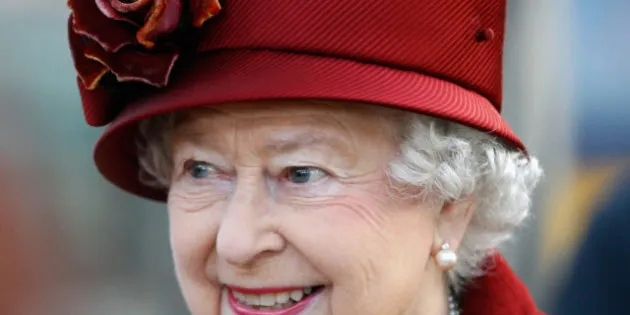
But does this charity work warrant a Canadian to "swear that [he] will be faithful and bear true allegiance to Her Majesty the Queen Elizabeth II, Queen of Canada, Her Heirs and Successors?" Absolutely not. It may very well warrant respect, but only in the sense that any charitable person (be it Prince William or William Shatner) should. Because when it comes down to it, beyond this, what else does the Royal Family do? They're benign figureheads, symbolic of a once-great empire and colonialism's chains.
Yet the Harper government has decided to engage in a sort of rapprochement with our once-masters, forgoing a true Canadian identity for one that is irrevocably linked with that of England. And the Liberals (in a rare showing of courage) are protesting this, going so far as to say Canada should sever its ties with the monarchy.
Good. The monarchy has no business having any business in a democratic country such as Canada. And it's not so much a Liberal, Conservative, or even political issue as much as it is a Canadian one. We are an independent nation of Canadians first and foremost, and should not be subjugated to professing our love, let alone allegiance to some woman (for that is what she is, some woman) across the Atlantic, living in a palace.
If the British want to be reigned over by an unelected person, then so be it; but the same must not be applied to Canada if we wish to call ourselves an independent country. A woman with no executive, legislative, or judicial power should not occupy our currency in the same way that Canadian figureheads such as William Mackenzie King and Robert Borden do. For all their foibles, at least they did something for the country.
Furthermore, it's wrong that the country's head of state is a position that no one can aspire to unless they have the same blood. Again, if the Brits want it to be that way, then let them have it. But to have a country that calls itself a) democratic; and b) independent such as Canada, consent to the fact that the highest position in the land is unattainable by any resident, and on top of that, anyone who is not Anglican, is not only contrary to all notions of democracy, but it is downright nepotistic in the most honest sense of the word (for it is truly and only based on family) and religiously discriminatory.
Maybe for the time being, and the way the monarchy is with the mute Queen Elizabeth II, things don't seem so bad, let alone embarrassing for Canadians. But as Daniel Defoe asked in 1713 in An Answer to a Question that Nobody Thinks of and Christopher Hitchens in 2010 in "Charles, Prince of Piffle," what's going to happen if the Queen dies? The answers are incredibly different, and more important, show why that family has no business reigning over anyone. Should Elizabeth die, Canada's head of state will be Prince Charles, a man who believes "plants do better if you talk to them in a soothing and encouraging way." People everywhere mocked Spencer Pratt of MTV's hit reality show The Hills for his fascination with the cleansing properties of healing crystals, yet Charles proves it's not an "eccentricity" reserved for Californian celebrities alone. Some head of state, huh?
And take a peek into the life of Prince Andrew. I say the monarchy does nothing save for charity work. Well, that's wrong. Prince Andrew has very little chance of ever sitting in that throne, but the fact that he is in line to and that he may one day reign over Canada is something that this nation should be ashamed of. We mocked Berlusconi for his sexcapades; well, at least he wasn't guaranteed his place as head of state by the rules of archaism and nepotism and the holy man in the sky.
The Liberals have put forth the argument that Canadians are paying more for the monarchy than the British are, with visits for the Queen last year costing taxpayers $2.5 million (not including policing costs). But hand it to the young liberals to dance around the real debate: it's not how much Canadians are paying, it's what they're paying for, which, according to Robert Finch, COO of the Monarchist League of Canada, is "the stability of the Crown [...] for the price of a cup of coffee"; i.e. $1.53 per capita each year.
Amounting to $40 to $50 million a year (according to Tom Freda, of Citizens for a Canadian Republic), the sum is not necessarily a large one by any means. But paying for the Crown, and for those visits from William and Kate and Elizabeth, comes at the cost of Canadian dignity and independence, regardless if the fee is $50 million or $50.
If they want to come say hello to their fans, let them, but on their own dime, or at that of their ardent fans (à la Lady Gaga). Me, I'll happily forgo the stability of archaism for an extra coffee every year. At least I know I'll be drinking it as a free man, and not a serf.
To read why the Queen matters, click here. For an excerpt from Sally Bedell Smith's biography: Elizabeth The Queen: The Life of a Modern Monarch click here.
Follow Daniel Alexandre Portoraro on Twitter: www.twitter.com/dportoraro
Keith Beardsley: Is it Time For a Referendum on the Monarchy?
Canada's constitutional monarchy - Canada - CBC News
Why the monarchy (sigh) still survives in Canada - The Globe and Mail
Does Canada have a monarchy government
Maher: Modernizing Canada's monarchy could begin with elected ...
Queen Elizabeth I: Biography, Portraits, Primary Sources
Canada's constitutional monarchy - Canada - CBC News
Why the monarchy (sigh) still survives in Canada - The Globe and Mail
The years of collaboration between our countries have brought forth a country that others in the world envy and flocked toward to become citizens. She and those before her are to be commended not insulted.
i respect how are country was founded and i am proud to be apart of that, but society was meant to evolve with the changing times and we seem to have forgot that.
The point is the queen right now is eating up a fair amount of our money, we even paid for the couple to go the the U.S., and she does not act in the intrest od canadians and probably never has, someone said on these comment my generation dosent look to the past.we do and we see more than you think
When the queen gave brian mulroney authority to "stalk" the senate and get passed a tax that the people voted down twice is that democracy. to me whenm i found this out the queen and the monarch lost all ligitamacy within our country. canadas society must evolve past this dead system that was not democratic to begin with, ie.. how can we have democracy when we dont even vote for the senate
The queen knowingly trampled the rights of canadians and gave the authority to initiate getting the tax through, this alone says it all
Thank you far your years of service and the charity contributions but we will no longer be needed you elizabeth, goodbye
I for one, am proud to be a citizen of a country which, since it's founding has promoted democratic rights and freedoms for individuals. We inherited much from the founding nations of Canada - Great Britain and France. Our "Father" and "Mother" if you will allow me use of the expression.
Our entire legal system is a carefully crafted mix of British criminal law and French 'tort' or civil law. We simply couldn't have successfully made the transition to a modern nation-state without the benevolent assistance of our founding nations - of which our Monarchy was and remains a part.
Because we don't depend on either country (or the Monarchy) on a day-to-day basis anymore (quite unlike our early days) should we speak abusively of them and try to minimize their many contributions?
Just because your Mother is getting old and you no longer need her assistance daily, should you just toss her into the nearest dumpster on your way to work?
Ungrateful in the extreme.
RCAP states:
Representatives of Aboriginal nations entered into
solemn agreements with representatives of the British and French Crowns
and with their successors, agreements that enabled Europeans and others
to establish themselves in this country with minimal violence and
confrontation. These agreements were and are the mechanism for affirming
collective rights and obligations on both sides, for sharing the land and its
resources, and for agreeing to live in harmony and partnership.
Thus it is the continuing nation-to-nation character of the
Aboriginal/Canada relationship that differentiates the status of Aboriginal
peoples from that of other people in Canada. Because of this, Aboriginal
peoples are not cultural minorities in the sense that Canadians have come
to understand the term. Neither are they citizens with a slightly expanded
set of rights based on their descent from the original inhabitants. Aboriginal
people have historical rights. They form distinct political communities,
collectives with a continuing political relationship with the Canadian state.
This is the central reality that Canadians must recognize if we are to
reconstruct the relationship.
Cheers!
John Brian Shannon
I remember asking my grandmother about this when she was chosen to meet the pope in 1985...
& she remarked that reaching out to others is like water trickling down through a mountain, making a path until there is a roaring river underground -
that's how I am to remember the duty to inform poorly or uneducated peoples newly here on Turtle Island & to constantly & consistantly strive to teach others about Treaty & Aboriginal Rights..
She also reminded me that there are those that have ears but do not listen because they have an answer already in place...
but as Georges Erasmus remarked after the 5 yrs he spent on the Royal Commission in relation to my 5 yrs. developing & implementing the Odawa Sweetgrass Childcare Agency..
"all effort expended to working for the benefit of the people is the result of our understanding our responsibilities handed down to us from our elders.."
Clinton Rickard was a humble example on upholding duties given to him by the confederacy..
& his example was Deskaheh ..
One row represented the white man's ship that contained all of his culture, religion, and laws. The other row represented the Iroquois in their canoe, with all of their traditions, beliefs, and laws.
It was called the Covenant Chain because the metaphor for that relationship was a silver chain that tied the white man's ship and the Iroquois canoe to the Tree of Peace.
An actual silver chain was made to symbolize their agreement. The three links of that chain were said to represent peace and friendship forever, the basic themes of all Iroquois treaties.
This is also the first written treaty to use the famous phrases: "as long as the sun shines upon the earth; as long as the waters flow; as long as the grass grows green, peace will last."
As the dominant European powers in North America changed, the Covenant Chain was continually renewed with the Haudenosaunee.
http://www.iroquoisdemocracy.pdx.edu/html/covenantchain.htm
http://activehistory.ca/2010/07/the-queen-among-the-mohawks/
http://www.parishoftyendinaga.org/chapelroyal.htm
Make your way to the Gothic-style Christ Church, Her Majesty's Royal Chapel of the Mohawks, on South Church Road, just above Bayshore Road, to see one of only six "Chapels Royal" outside the United Kingdom. Now designated a National Historical Site, the stone Church was built by the Mohawks in 1843 to replace a log structure built soon after 1784 landing of the first arrivals.
The Church is filled with Royal Gifts, testament to the long association of the Mohawks with the British Crown. On display is a triptych in the Mohawk language given by King George III, a Royal coat of arms given by King George V, a Bible presented by Queen Victoria. The Church's most historic artefact-used only on ceremonial occasions-is the treasured Communion Silver set given by Queen Anne in 1711 as a symbol of Mohawk and British alliance.
Plaques at Christ Church also honour the dedicated volunteer military service of Mohawk Veterans from World Wars I and II.
http://www.bayofquintecountry.com/tyendinaga.cfm
In so doing, as the Archbishop of Toronto Colin Johnson and the day’s homilist Cathedral Rector Douglas Stoute reminded the 700 sweltering bodies inside the Cathedral and the thousands lining King and Church Streets outdoors, the Queen honoured a relationship that pre-dates the existence of Canada by more than 150 years.
As a historian, one is struck by Elizabeth’s choice of July 4 as a date to commemorate the 300-year relationship between the British Crown and the Mohawk Nation. Further, given the contentious, sometimes even bloody, relationship between the Canadian state and the Six Nations since Confederation, the import of the Queen’s decision to pay such homage was not lost on the Mohawks present, or on attentive observers of indigenous-settler relations in Canada.
Read more:
http://activehistory.ca/2010/07/the-queen-among-the-mohawks/
If our goal is to maximize democracy in Canada(is it fair to assume that?), we must start by getting rid of the monarchy. If we did not vote them in, they have no legitimacy. Also, the monarchy serves no real social or economic benefit to Canadians. As the article discusses, it actually takes money to host their visit.
The crown is also the head of the church of England. The only reason the anglican church exists is because Henry 8 wanted more power for himself. The guy invented his own church just to consolidate power. This institution still exists. Bogus. We as Canadians deserve better than to have THAT institution at the top.
Word of advice?
Get a girlfriend.
Or if you just want someone to talk to, get a dog.
'Canada' is in fact part of the Commonwealth and always has been. The Queen is the legitimate Head of State just as much as she is the Head of State of the UK.
Any migrant choosing to come to Canada should be very well reminded of that fact, and that this is part of the 'definition' of what we are, it is not 'up for discussion' any more than making say - Bangladeshi the official language of the country.
It would seem not. Without the British , French, and aboriginals ,there would be no Canada. We would simply be another state in the US. union.
As Canada stands, today, we are masters in our own house, and the monarchy plays a largely ceremonial role. For example any and every bill that is passed in the Canadian parliament, is concluded by Royal assent, with no bill ever being rejected by the Queen. The Commonwealth of nations headed by the Queen, is a positive force in the world promoting peace and understanding among nations. There is every reason to maintain the monarchy, and few , if any advantages in ditching it.
The British Empire was one of the world's most benevolent.
Only an ill informed socialist would believe that distributing wealth to poor, from royalty would make one iota of difference in the world.
Could the queen veto bills that she disapproves of? Indeed she could, and that is where the danger is. The fact that she holds ANY political powers whatsoever in a modern democratic country is reprehensible. Indeed her role is largely ceremonial, and the monarchy certainly serves as a "positive force in the world promoting peace and understanding among nations". But what if they were not and did not? Are you saying that the Commonwealth organization would cease to function without a monarchy?
There are advantages to getting rid of the monarchy. The first is maximizing democracy in Cananda. Canadian elected officials should be the only folks in charge of policy. It is a matter of national sovereignty. Period.
Secondly, our sense of Canadian national identity, especially out here in BC, is quite nebulous. Getting rid of the Queen would allow us to finally shake the yoke of a part of our history that many of us do not identify with.
The Queen is in Fact a Canadian Citizen and carries a Canadian Passport.
As long as the Queen's Portrait is on the money we are in fact British. British does not mean English. British means Citizen of the Empire ( Commonwealth. )
We are not the only country that struggles with this anomoly.
Sixteen countries left the Commonwealth to become Republics all came back.
Even though we called ourselves Canadian,we have only been truly Canadian since 1947.
The Flag came in 1965. " Red Ensign or Maple Leaf. " Either one
is fine for me although I do wear a Maple Leaf on my Lapel.
When Queen passes away ( pehaps in 25 years, if she lives
as long as her mother, the Queen Mom ). perhaps that may be a time to consider the option.
Then you will have a Constitutional Debate that will last at least 25 to 50 years.
The Queen does serves a purpose. The Commonwealth is an Economic and Military Alliance.
Canada is a small Nation covering a vast territory. The fathers of Confederation made a Pledge
of Loyalty to Victoria., which will never be broken.
Elizabeth, by the Grace of God, Queen of the United Kingdom , Canada and other Realms and
Territories. You will notice that Canada is the only Dominion mentioned .
Do not force the issue , just allow Time and Circumstance to show Canadians the right path
to follow.
1962 – : Her Majesty Elizabeth the Second, by the Grace of God, Queen of Jamaica and of Her other Realms and Territories, Head of the Commonwealth
Saint Kitts and Nevis
1983 – : Her Majesty Elizabeth the Second, by the Grace of God, Queen of Saint Christopher and Nevis and of Her other Realms and Territories, Head of the Commonwealth
Saint Lucia
1979 – : Her Majesty Elizabeth the Second, by the Grace of God, Queen of Saint Lucia and of Her other Realms and Territories, Head of the Commonwealth
Saint Vincent and the Grenadines
1979 – : Her Majesty Elizabeth the Second, by the Grace of God, Queen of Saint Vincent and the Grenadines and of Her other Realms and Territories, Head of the Commonwealth
As an 'aboriginal' - YOU belong in a museum.
Otherwise, let's try to get along.
"This stone was taken from the grounds of Balmoral Castle in the Highlands of Scotland — a place dear to my great-great-grandmother, Queen Victoria. It symbolises the foundation of the rights of First Nations peoples reflected in treaties signed with the Crown during her reign.
http://www.themonarchy.ca/en/monarchy/firstnations.shtml