This week in Nova Scotia, a grade 12 student was suspended from his high school for persistently wearing a T-shirt emblazoned with the words, "Life is wasted without Jesus."
He was told that some teachers and students in the school were offended by the words on his shirt. Then he was told that if the shirt had said "MY life is wasted without Jesus," it would have been different. Really? Surely, that too would offend someone.
Canada's Charter of Rights and Freedoms protects both freedom of religion and freedom of expression, but nowhere does it protect people from feeling offended. As A. Alan Borovoy, general counsel emeritus of the Canadian Civil Liberties Association has said, "The thin skin of one should not be allowed to limit the free speech of another."
Our public schools are in the habit of celebrating diversity. Unfortunately, they often celebrate the "box of Smarties" model, which says how nice it is that we are so many different colours -- but we all taste the same on the inside.
No, we don't.
How many people believe that their religion is the one true way to God? Quite a few -- and they differ from one another profoundly. Will it offend some people to learn that others don't think their faith is the true one? Without question.
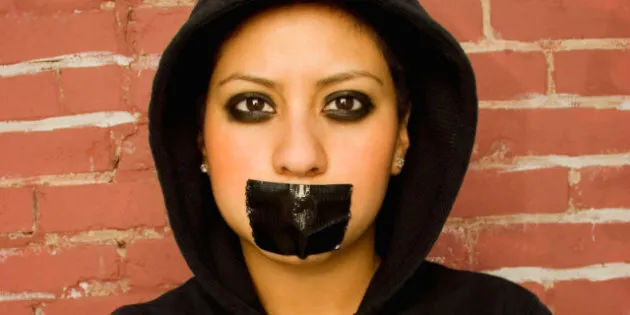
But what do we say about offending people in a school setting? Do we allow students to upset one another, or do we limit their freedom of religion and freedom of expression in an attempt to make everyone feel included and welcome? And how can people feel included and welcome when we forbid them from expressing what may be intrinsic to their identity, as religion so often is?
While what is appropriate to wear in school may differ from what is acceptable on the street, schools surely have a role to play in the exploration of ideological differences. If the reflex of school authorities is to punish anyone for expression that might offend another person, they have missed an opportunity to teach students to think critically.
Education authorities should ask themselves some important questions before deciding to ban any expression. The first question is, why? What is the purpose for forbidding the "Life is wasted without Jesus" slogan? It appears that the school thinks this will prevent students and teachers from being offended. What about the student who is punished for wearing a slogan that expresses his religious view? Was he offended? How many people have to be offended before we act? Is it a numbers game? Does the majority rule? Or do we need to eliminate expression that offends only a very small number?
It does not take long to see that unpopular expression, such as those of vulnerable minorities, will be the first to go. If the largest number of us is uncomfortable with the complaints of the few, is it expedient to silence the few?
There may, indeed, be students and teachers who do not believe that life without Jesus is wasted. Should they too be silenced, as their view may offend others? Or should we teach our students the habits of democracy? How can our young people learn to deal with expression with which they disagree? If we teach them that we ban unpleasant words, we are not fulfilling our obligation as educators.
In a diverse and complex society, learning to disagree without being disagreeable may be a survival skill. If each of us feels strongly that our Charter right to freedom of religion includes a right to tell others what we believe, we need to develop our ability to listen to one another and to disagree with one another in a respectful fashion.