We're not about to quit oil cold turkey. Does that mean we should continue with business as usual?
In Canada, "business as usual" means rapidly increasing oil sands exploitation and selling the bitumen as quickly as possible to anyone who wants it. It means continuing to import half the oil we use, mostly from the Middle East, while shipping oil extracted here to other countries. It means continued tax breaks and subsidies for fossil fuel companies while manufacturing and other value-added industries suffer because of our inflated petro dollar. It means low royalties and not putting away revenues for the future.
This could spell a bleak future: a failing economy as accessible oil starts to run out with few renewable energy sources to replace it; deteriorating health of citizens as water, air, and land become more polluted; increased droughts, floods, and water shortages as climate change increases.
But it doesn't have to be bleak. We could have a healthy and prosperous future. Canada could be seen as a world leader on energy, human rights, and global discourse. The solutions are not radical. They include such reasonable measures as slowing oil sands production, eliminating subsidies to an industry that hardly needs them, increasing royalties, setting up a rainy day fund for the revenues, and encouraging energy conservation and renewable energy development.
We could also learn to use fossil fuels more efficiently. For example, about 75 per cent of petroleum in North America is used for transportation. Automobiles waste 85 per cent of the energy from each litre of fuel burned. And the useful energy goes to moving a vehicle that typically weighs 10 to 20 times more than the passengers it carries. That translates to about one per cent efficiency to move passengers.
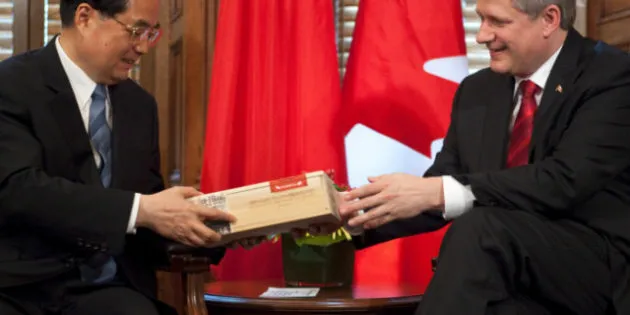
Part of the solution requires untangling the rhetoric. Consider what our prime minister recently said in China: "We will uphold our responsibility to put the interests of Canadians ahead of foreign money and influence that seek to obstruct development in Canada in favour of energy imported from other, less stable parts of the world."
How will selling most of our unrefined bitumen to China and the U.S. make us less reliant on "energy imported from other, less stable parts of the world"? And how are the interests of Canadians served by selling our industries and resources to countries with atrocious human rights records and rapidly increasing greenhouse gas emissions? How is it in the national interest to increase our own greenhouse gas emissions and pollution so that some of the world's most profitable companies can make even more money?
And why, when we know that global warming is serious and that oil will run out, are we hell-bent on using it up as quickly as possible? Author and environmentalist Bill McKibben suggests a disturbing reason why people in the fossil fuel industry and the governments they bankroll put profits ahead of the future of the planet and deny that climate change is a problem: the value of these industries "is largely based on fossil-fuel reserves that won't be burned if we ever take global warming seriously."
As McKibben notes, "ExxonMobil, year after year, pulls in more money than any company in history. Chevron's not far behind. Everyone in the business is swimming in money." If they were to slow down production, or even admit that the future of humanity depends on leaving some of the resource in the ground, it would hurt their bottom lines.
And so we have politicians and industry shills using bogus talking points to discredit or silence those who are calling for sanity for the sake of our future. They falsely accuse us of wanting to shut down all industry and call us hypocrites because we are unable to completely disengage from the fossil fuel economy and infrastructure that humans have created.
All we're saying is let's step back and think of a sensible way to go about this. And by "we," I mean most of us. I mean you and me. I mean the people our governments are supposed to represent. They can say we're radical if it makes them sleep better at night, but we prefer the term "rational."