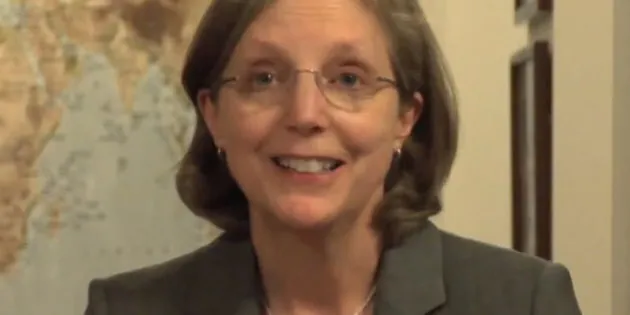
My vision for Canada's future is one that appeals to our higher aspirations and hopes for the future, rather than to our fears, distrust, and resentment. In running for the leadership of the Liberal Party of Canada, I want to appeal to all those Canadians who are uncertain where they fit into Canadian politics, but want to talk about the kind of nation we are building, and what it is that makes us Canadian.
Too many Canadians are sitting on the sidelines of national politics. Many of us have lost any sense that the federal government can make a difference in our lives. We increasingly believe that there are only local answers to our challenges.
From the Occupy movement to the streets of Quebec, one thing is clear: Canadian citizens are disengaged not from society or political action, but from the usual political institutions that produce neither inspiring leadership nor effective governance. The message to political parties is that they must listen and respond to all the people, not only their core supporters, and not just at election time.
I see growing public unease with the degree of inequality within our society. Canadians recognize the intrinsic unfairness of CEOs and professional athletes earning astronomical multiples of the average incomes of their workers and fans; of politicians holding on to gold-plated pensions that most of us can only dream of while lecturing us about austerity; of high youth unemployment rates while long-term investment in education and training receives scant attention compared with retirement security.
Citizens are frustrated when our various governments pass the buck to one another. Ask the parents of children with autism, who need greater comparability in relevant health services across Canada. Ask low-income families and individuals living on the margin, who find that when they earn more at work, clashing program rules can trigger devastating cuts in essential housing or other benefits. Many Aboriginal citizens live in shameful conditions while governments argue about who's at fault.
The centralized control practised so skillfully by the Conservative government depends on maintaining Canadians' low expectations of national government, and on our willingness to remain indifferent. So we are played for fools while it is decreed from Ottawa that we shall have oil pipelines and F-35 aircraft, with little or no debate in Parliament and inadequate disclosure of inconvenient information. All the while, an increasing number of national responsibilities, from environmental assessments to pensions, are quietly and unilaterally transferred to the provinces, and the federal government withdraws from any meaningful role in health care beyond sending out cheques.
We are subjected to manipulative politics that pits west against east, rural against urban, resource-rich against resource-poor. But we are not the divided country that our political elites like to claim -- our diversity of geography and population is a source of dynamism, not difficulty. We are ready for a more principled politics that neither clings to ideology nor simply brokers the interests of those with the power to sit at the table.
We need a national government that speaks for Canada as a whole and sees itself as an instrument of the people. We want a better-functioning federation that fosters and requires the open collaboration of all levels of government -- federal, provincial, municipal, Aboriginal -- so that government can actually help Canadians meet the real challenges that we all face on a daily basis: finding and keeping a decent job with decent pay, raising children in a safe and clean environment, caring for elderly parents and disabled relatives, ensuring enough food is on the table.
In my campaign, I want to engage Canadians in strengthening a sense of national purpose. I believe we can rebuild the Liberal Party to be the party of principle and bold national leadership that stands for a Canada that is more than the sum of its parts. The polarized politics of left versus right is not what ordinary Canadians want; it is a creation of an outdated mindset that values winning at any cost, while Canadians are interested in getting things done.
Canada is a land of vast opportunity with a vibrant, globally connected population and extraordinary and expanding human energy and potential. It is time to fully embrace what we can do as a country and as a people, to unleash this tremendous energy -- the ideas, the talents, and the drive. Join me in my vision of tomorrow's Canada: a powerhouse of prosperity, sustainable living, and social justice.
Originally published in the Toronto Star.