Since the Sandy Hook shootings, there seems to be a popular mantra that we need better and easier access to quality mental-health care. This is probably a true statement, and certainly I can't imagine very much harm accruing from making more resources available to people with mood disorders or other forms of mental illness, or even learning or behavioural problems, who need counselling and/or medication and/or help navigating the available web of services.
For parents in particular, figuring out where to go to get this kind of help for troubled kids can be confusing and difficult. In the U.S., a big barrier can be the limits of insurance coverage. Here, a major barrier lies in lengthy wait lists for appointments with psychiatrists and it is also not helpful that GPs act as gatekeepers for such specialists. You can't just call up a psychiatrist and make an appointment -- you need a referral first. It's not a huge hurdle, but when someone is debilitated by depression, even the smallest tasks can seem insurmountable, so adding one more layer between a suffering patient and help can be the difference between someone who gets treated and someone who doesn't.
And yet, it seems to me we may be avoiding a difficult truth in all our post-Sandy Hook hand-wringing: There are limits to what mental-health treatment can do.
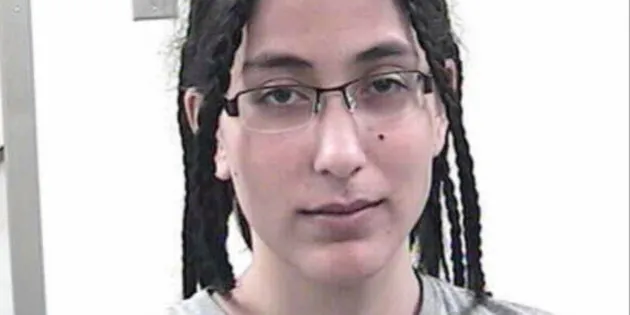
The recent story about disturbing violent offender Kayla Bourque, and the court's requirement for her to receive three years of outpatient counselling as part of her release from jail, brings this to the fore. Her history paints a picture of someone with complex behavioural problems for which counselling seems an inadequate solution.
Bourque has been convicted of killing animals and causing unnecessary pain and suffering or injury to animals. Later, she was found guilty of possessing a weapon for a dangerous purpose. She is said to have killed her own family's dog and cat. According to the B.C. Justice Ministry's corrections branch, which took the unusual step of issuing a public warning about Bourque upon her release, the young woman has also committed violent offenses against people.
Not creeped out yet? How about this?
The Canadian Press quotes Professor Rob Gordon of Simon Fraser University's criminology department, where Bourque took classes, as saying that Bourque had talked of her fantasies of killing a homeless person. Gordon also told CP that police who searched Bourque's dorm room found a "kill kit," which contained duct tape and other restraints.
It is no doubt for these reasons that a court saw fit to impose 46 conditions on Bourque as part of her release. For example, she is not permitted to have any weapons (knives are okay, but only if used to prepare food). And she is required to go to out-patient counselling for three years.
The idea that someone with problems as profound and deep-seated as Bourque's can be "cured" by dropping in for sessions at a clinic for a few years is pretty far-fetched. In fact, I'm not sure there's anyone out there who believes such a thing is possible.
Certainly the B.C. Justice Ministry doesn't; otherwise it wouldn't have felt the need to issue a public warning about Bourque's whereabouts, presumably so that people can take precautions around Bourque. And given Bourque's pattern and escalation of offenses, why should we think treatment can perform the miracle of instilling a conscience where a natural one seems to be lacking?
Don't get me wrong. I'd rather a person like Bourque be treated than not. But in cases like hers -- and perhaps Sandy Hook shooter Adam Lanza's (though we will have to learn more to judge for sure) -- it would be good to drop the pretense that the principal problem could be solved simply with "more and better mental-health care."
Bourque spent her formative first months as a Romanian orphan who no doubt endured the awful conditions and neglect that we now know were common in that country's institutions. It's an environment that has been shown to alter infants' brain and social development. It's also possible Bourque has genetic precursors that made her more vulnerable to the stresses of that trauma. Whatever the case, in some sense, it would seem (from the outside at least) that the damage has been done. And the part we ought to own up to is that there may simply be no realistic way of reducing people like Bourque's risk of committing a violent offense to a reasonably low level.
In no way does that mean we should stop trying. Reducing Bourque's risk of offending by any amount would be better than not reducing it at all. And providing her with any relief from whatever painful feelings she may suffer would be better than providing her with none. But it's about time we in the public started grappling with the difficulty those in the mental health and corrections professions have long been wrestling with: There is a sizable class of people who 1) do not currently fit the criteria for forcible commitment to an inpatient facility, but 2) are also not mentally healthy and are not going to get that way through conventional outpatient treatment, regardless of how accessible it may be.
What do we do with such people? Adjust inpatient commitment standards to make them more flexible? Wait for the first encounter with the justice system, then pile on the court-ordered conditions, as the court has in Bourque's case, to try to cover all the bases of danger? There's no easy answer. But even acknowledging that fact -- rather than robotically demanding "more and better" mental-health care -- might be a good start.
