I woke up just past midnight with a bolt. My six-month-old son was crying. He has a cold -- the second of his short life -- and his blocked nose frightens him. I was about to get up when he started snoring again. I, on the other hand, was wide awake.
A single thought entered my head: Chief Theresa Spence is hungry. Actually it wasn't a thought. It was a feeling. The feeling of hunger. Lying in my dark room, I pictured the chief of the Attawapiskat First Nation lying on a pile of blankets in her teepee across from Parliament Hill, entering day 14 of her hunger strike.
I had of course been following Chief Spence's protest and her demand to meet with Prime Minister Stephen Harper to discuss the plight of her people and his demolition of treaty rights through omnibus legislation. I had worried about her. Supported her. Helped circulate the petitions. But now, before the distancing filters of light and reason had a chance to intervene, I felt her. The determination behind her hunger. The radicality of choosing this time of year, a time of so much stuffing -- mouths, birds, stockings -- to say: I am hungry. My people are hungry. So many people are hungry and homeless. Your new laws will only lead to more of this misery. Can we talk about it like human beings?
Lying there, I imagined another resolve too -- Prime Minister Harper's. Telling himself: I will not meet with her. I will not cave in to her. I will not be forced to do anything.
Mr. Harper may relent, scared of the political fallout from letting this great leader die. I dearly hope he does. I want Chief Spence to eat. But I won't soon forget this clash between these two very different kinds of resolve, one so sealed off, closed in; the other cracked wide open, a conduit for the pain of the world.
But Chief Spence's hunger is not just speaking to Mr. Harper. It is also speaking to all of us, telling us that the time for bitching and moaning is over. Now is the time to act, to stand strong and unbending for the people, places and principles that we love.
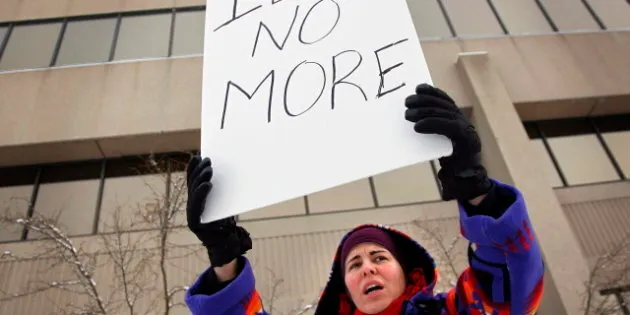
This message is a potent gift. So is the Idle No More movement -- its name at once a firm commitment to the future, while at the same time a gentle self-criticism of the past. We did sit idly by, but no more.
The greatest blessing of all, however, is indigenous sovereignty itself. It is the huge stretches of this country that have never been ceded by war or treaty. It is the treaties signed and still recognized by our courts. If Canadians have a chance of stopping Mr. Harper's planet-trashing plans, it will be because these legally binding rights -- backed up by mass movements, court challenges and direct action will stand in his way. All Canadians should offer our deepest thanks that our indigenous brothers and sisters have protected their land rights for all these generations, refusing to turn them into one-off payments, no matter how badly they were needed. These are the rights Mr. Harper is trying to extinguish now.
During this season of light and magic, something truly magical is spreading. There are round dances by the dollar stores. There are drums drowning out muzak in shopping malls. There are eagle feathers upstaging the fake Santas. The people whose land our founders stole and whose culture they tried to stamp out are rising up, hungry for justice. Canada's roots are showing. And these roots will make us all stand stronger.
*This post first appeared in the Globe and Mail.
