Earlier this year, Liberal MP Justin Trudeau got into trouble for suggesting that he understood some of the resentment of Québeckers opposed to Harper's Canada, then backtracking after accusations that he was a closet separatist. I feel a little sorry he did so, as I feel as he probably did before he retracted. If ever it really did look like Québec was coming close to separation, I'd move back in a flash. There'd be no way I'd let the province secede and me be without my home and the Péquistes be without the thorn of me in their side. But I'd also be there because I like what Québeckers are demanding.
But separation isn't going to happen. My own recent experience in Québec has been of Francophone Canadians speaking without prejudice and actually quite enthusiastically about the rest of Canada in ways that put prior territorial anxieties about identity in the shade -- about Toronto and Vancouver as places of opportunity, and Ontario, would you believe (as happened to me in Montreal's Jean-Talon Market) as the place to find Canada's best artisanal burrata.
Don't discount this little foodie detail. Haute cuisine in restaurants or the terroir have always provided Québeckers a way of feeling superior and even a few years ago it would have been unimaginable that a cheese seller would have spoken admiringly about an English-Canadian product. For a long time now these accompaniments to separatist sentiment have been receding before most of the province's more confident, integrated sense of place in the world -- and Canada. The memory of having to speak English at Eaton's is not a personal one anymore, but a popular fable dying with the older generations that tell it. Today it is not separation that Québeckers want, but a better society, a better representation of their views.
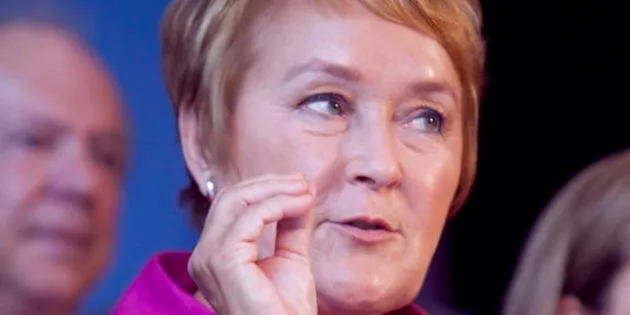
But, as Pauline Marois is about to find out, this is not so easy to achieve. Indeed, the politician's handsome pension aside, I can't imagine how anybody in their right mind would actually want to be in power these days. Such a fractious time it has proved, even before the looney tune Richard Bain decided that knocking off a couple of Péquistes (and perhaps even newly elected Pauline Marois herself) would somehow settle Québec's divisions. This last election can feel like yet another tedious lap in a contest of civic attrition in which the end game is finally to be achieved by defeating the country through sheer ennui. Still, though I might be placing my bet from Québec, I'd still put my money on Canada.
Of course I would. I'm old enough to remember November, 1976, when Réné Lévesque's Parti Québecois won their first majority and, stoned out of my mind at the time (and practicing my "joual" for the new epoch at a concert in Montreal's Plâteau), the excitement for the "avenir" of what was also a left-leaning party that filled the political air with the fresh breeze of new faces.
Sure, the PQ were separatists, but the citizens of la belle province understood -- and Montrealers, most of all -- that voting in Canada was a matter of negotiation, of setting up a good federal-provincial fight (and throwing in a crooked mayor if, say, Olympics were in the offing) and that the effect of a federal system in which authentic opposition occurred along provincial lines had contributed to their victory.
And truth be told, Québeckers of all stripes knew they were different no matter what language they spoke. Quebeckers, we told ourselves proudly as kids, consumed more hash (not weed) per capita than Canadians from other provinces, we played more entertaining hockey, we ate better and later and listened to and made much, much better music.
The struggle for Canada's soul that was being waged by a French-Canadian in Ottawa, Pierre Trudeau, and his nemesis at home, Réné Lévesque, left most Québeckers feeling privileged. Both were idealists, though also clever and pragmatic. Both were of fiercely individual character. It was a level face-off and a compelling situation. It was not a bad time to have been a voter, really -- before, that is, Camille Laurin and Bill 101 soured it all up and the unfinished Olympic stadium became a sign of Québec's moral and financial collapse.
Now we live in a different, more prosaic time. So much is about "efficiency." The face-off is about as compelling as a hockey game between two teams of dull New Jersey Devils. Each leader is clever and pragmatic, but their play is brutish and wearing, not entertaining. And each is the opponent that the other deserves. Prime minister Harper, whose office and party have distinguished themselves in their refusal to consider, let alone engage with dissonant views -- whose office and party evidently decided long ago that a portion of the electorate in the mid- to high-30s was more than enough to have their way and to hell with the rest -- now faces in Québec a sovereigntist party that can behave that way with impunity. The Tories have provided the example.
Québecois voters will have to negotiate their way around this new situation of two leaders whose tactics (of piecemeal purchases of a critical one or two per cent of the vote) will be similar but who otherwise cannot possibly be reconciled. And likely they will do so as dexterously as they have always done.
I admire Québeckers. They're discursive. They're engaged. They consider the landscape and vote on the basis of a calculus that is infinitely more sophisticated than, say, the sports team mentality that drives a majority of Albertans in federal (if not civic) elections. Alberta's ludicrous matrix is one in which the imagined slights of more than 40 years ago, Pierre Trudeau's 1980 National Energy Policy, chief among them -- slights that occurred before most voters in that province were even born -- mean that saying you're a liberal or a green in that province is to risk (remember the Wildrose Party) a Southern Gothic shower of hellfire and brimstone.
But what's true of Québec is also true of Alberta, which is to say that there is a massive portion of the electorate, a lot of it recent and young, that simply is not represented by the generations that make their way in politics and end up speaking for each province. The circumstances that led to the dumping of Jean Charest and his provincial liberals and the slim Péquiste victory are a continental phenomenon, the same that have that supported the Tories in federal elections and Tea Party Republicans in the United States.
The biggest of these is blowback on the part of mostly white, wealthy, and conservative communities -- as can be found in Taber, Alberta, though also in rural Ontario or in Montmagny, Québec -- voters suspicious of cities and the baffling, unwanted social changes that are brewed in them (multiculturalism, same-sex marriage, green activism, welfare politics, tweets). Another is the desire simply to dump politicians who have appeared to overstep the bounds: as Jean Chrétien and Paul Martin's Liberals did, long ago, vis-à-vis the "Sponsorship Scandal," as Gilles Duceppe and the Bloc Québecois did with their endlessly disruptive but also pointless complaints, and as Jean Charest appeared to do with his insufficiently probing inquiry into corruption in Québec's construction industry.
As a whole (the idiot Bain not worth discussing), Québeckers still have confidence in the democratic process. More than that, they expect something from it, and palpably, as voting, historically, has benefited the province much more than any dalliance with more violent protest, or guns.
Canadians used to be impressed by this, and still should be -- that change, should it happen even to our borders, would occur in Canada at the ballot box. Anglophone Canadians can rant about Québec or pontificate from lofty Bay Street heights about what it is costing the rest of the country to satisfy the province and do so until the cows come home (or, as Marois puts it, until the conditions are right), but the truth is that Canadians are mostly jealous and miffed by a society that repeatedly shows how it is distinct, most of all, in getting its way.
In fact, the rest of the country would do well to consider what it might learn from Québec. All the rage and haughty impatience that was directed towards the student protests in Québec (a variety of the smug posturing towards the troubled countries of Europe during the ongoing economic crisis' effected by the same Anglo-Saxon champions of visionless "efficiencies") shows just how distinct Quebeckers can be in their expectation of what politicians should provide.
Substitute, for instance, the word "principle" for "entitlement" as it used by the Rest-of-Canada critics of the student protests -- or of unions, labour, health or day care -- and you have the perimeter of an entirely different argument about the fair society that Québeckers, perhaps on their own, are having. And, to their credit, the debate is one that, now we can legitimately say "repeatedly," they do not shy from delegating young people to conduct. Aged 21, the savvy leader of the student protests, Leo Bureau-Blouin, a natural politician (that, not altogether a compliment) is now a Péquiste MLA.
Bureau-Blouin was put into office by people much older than him, the youth turnout for the last vote having been, again, very small, just as, in the last federal election where Québec voters sent a bevy of youngsters, some of them students and one of them a 20-something single mom, to Ottawa to mind their interests without, I think, any particular expectation that these bright kids were somehow not capable or would embarrass themselves and their constituencies.
So, not wanting to be a spoiler, but because I love Canada and all that it used to stand for -- the peaceful resolution of differences, most of all -- I can say that I find the Québec election result tremendously encouraging. The spectre of separatism is exaggerated, though we should also be relieved that the PQ did not have a more popular leader and benefit at the polls from that. The province wanted a change of leader, and hence the good man Jean Charest's ouster.
Fair enough. But fervently I wish that the numerous detractors in the rest of Canada of Québec's independence of thought would realize just how tired their own views are. The Globe and Mail, for Christ's sake, has been relying on the views of just one Francophone, Lysiane Gagnon, to interpret goings on in the province for more than 20 years!
This, just as it turns to the same handful -- David Bercuson, after the Wildrose Party's surprise defeat -- to explain Alberta to Canada, a territory being changed every bit as much by its youth as Québec is (and possibly more so, as young Albertans don't have to leave the territory to find a job).
Where is the effort on these institutions' part? Where is the curiosity of our country's tired, eroded, establishment? We could do worse than look for an example to a territory that, using whatever tools circumstances have placed in its reach, demands the change that elections can bring and turns to new parties and the young for fresh faces and views.
