Featuring fresh takes and real-time analysis from HuffPost's signature lineup of contributors
Peter Worthington

GET UPDATES FROM Peter Worthington
 

Charlie Hebdo Chooses Democracy Over Cowardice

Posted: 11/09/11 01:42 PM ET

According to Ayaan Hirsi Ali, the reaction to the Paris firebombing of the French satirical magazine Charlie Hebdo is another example of how fearful Western society is of offending Islamic extremists.

Hirsi Ali is the Somali woman who fled to Europe to escape an arranged marriage with someone in Toronto. She went to university and was elected to the Dutch Parliament. She migrated to the U.S. after collaborating on a documentary about the oppression of Muslim women (Submission) that resulted in filmmaker Theo Van Gogh being murdered and death threats made against her.

Her two books, Infidel and Nomad are persuasive accounts of the plight of women under Islamic law and culture. A scathing indictment of extremism that plagues the faith.

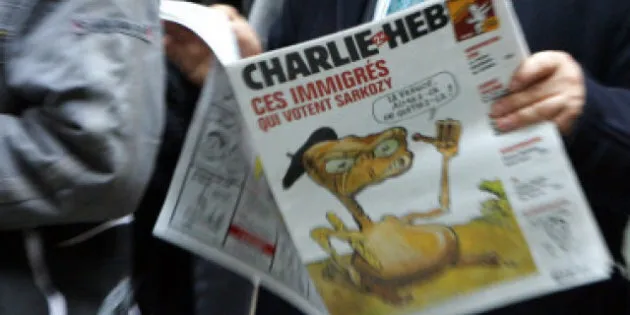
Her recent article on the Huffington Post Canada, cites the firebombing of Charlie Hebdo's offices after the magazine facetiously named the Prophet Muhammed as "guest editor," with the cover drawing depicting Muhammed promising "100 lashes if you don't die from laughter."

Ali notes that some commentators rationalize the firebombing on grounds that the magazine's "'offensive' issue provoked a predictably violent response from extremists."

She quotes an article by Time magazine's Paris bureau chief, Bruce Crumley, saying that mocking Islam is to "openly beg for the very violent responses from extremists their authors claim to proudly defy in the name of the common good. What common good is served by creating more division and anger, and by tempting belligerent reaction?"

Hirsi Ali points out that offensive "scatological cartoons of world leaders and caricatures of Jesus and the Pope" rarely result in violent reactions.

The upshot of Time's article is that "in a free society, a newspaper can ridicule and stigmatize whomever (sic) it chooses, except those who demonstrate a willingness to respond with violence. Extremist groups must be exempt from satire or criticism -- or the blame for ensuing carnage falls squarely on the shoulders of the offending publication."

In other words, self-censorship is the order of the day -- something not unknown in the Canadian media when it comes to Islamic extremists.

Ali cites examples of self-censorship in the U.S.: Yale University Press declining to reproduce Danish political cartoons of Muhammad in a book about the controversy -- "fearful of attracting the wrath of militant Islamic factions."

Random House cancelled the publication of a historical romance novel featuring Muhammad's youngest wife, Aisha. "Comedy Central censored an episode of the TV program South Park that featured Muhammad wearing a bear suit."

Ali says "fear of Islamist violence" has inhibited critical discussion of the Koran, and has "silenced those who would decry the treatment of women in some Islamic communities."

Accordingly, the message is that "Muslims, in general, are violent so it is better not to provoke them... so let's give them special treatment. What sounds like a well-intentioned and honourable message is, if you think about it, denigrating and racist."

Satire and questions by media are a hazard of democracy.

But for militant Islamists "there is no ideological distinction between firebombing a newspaper's headquarters and murdering a filmmaker like Theo Van Gogh."

That said, a majority of non-militant Muslims may not like Muhammad satirized, but they understand and accept free speech. They are the ones most damaged by minority extremism -- and the cowardice of those who make a virtue out of capitulating to threats of violence.

 
According to Ayaan Hirsi Ali, the reaction to the Paris firebombing of the French satirical magazine Charlie Hebdo is another example of how fearful Western society is of offending Islamic extremists.
 
 
  • Comments
  • 9
  • Pending Comments
  • 0
  • View FAQ
Comments are closed for this entry
View All
Favorites
Recency  | 
Popularity
12:30 PM on 11/10/2011
And who knows better about provoking individuals for the fun of it than Peter Worthington and his pals over at the Sun Media empire?
09:47 AM on 11/10/2011
I think the operative question should be: What are they trying to accomplish?

Provoking a reaction from extremist Muslims without having some sort of plan regarding them is like provoking the Mafia and without expecting the authorities to take notice and react. Sure, there is a principle to the thing. But what are you doing if your plan does not have any steps beyond getting beaten or killed?
HUFFPOST SUPER USER
bptrav11
Just hoping common sense wins out in the end!
11:58 AM on 11/11/2011
Humor does not have a plan. Humor is to entertain plain and simple. It is not a question of what group is portrayed in the satire. that should not have anything to do with it in a free society. That fact that some Muslims have such fanatical need to protect their religion should in no way preclude the rest of the free world from making satire in it's name without fear of violent reprisal. Is their belief that Islam is so weak as to not be able to stand up to the humor? Please stop giving them an excuse to be violent when it is never excusable.
HUFFPOST SUPER USER
dtrobert
07:30 AM on 11/10/2011
Wow, for once, Mr Worthington, we agree! Don't get used to it!
01:05 AM on 11/10/2011
Doesn't matter how much you try to rationalize it, if you are going to provoke people for the sheer hell of it then don't whine and moan about the consequences. OK so journalists think that they can be as nasty and disrespectful as they want and everyone has to put up with it. Problem is that not everyone will put up with it. What Charlie did could be considered as hate speech - because the underlying theme was contempt for Muslims - and for that they could and should be prosecuted. If someone asks me not to do something because they find it annoying I will usually comply with their request. Not because what I am doing is illegal but because, unless it is something which I have to do, I am considerate of others. The press doesn't give a damn about being considerate and the more outrageous they can be the better. But as I have said don't whine and moan when people show you, in whatever way, that they don't like it and are not going to stand for it. A Democracy is about tolerance not provocation and inciting violence. If Charlie could say why it was essential for it to mock the Muslims prophet, if they can show that there was a legitimate reason to insult people then there could be a rational discussion. But to say that Charlie did it because they can is not good enough.
03:14 AM on 11/10/2011
Yes it is. Obviously there is a point that needs to be made regarding what is and what is not acceptable in free societies. In order to make that point, it's sometimes necessary to do things that seem, to some, provocative "for the sheer hell of it".
HUFFPOST SUPER USER
dtrobert
07:34 AM on 11/10/2011
How is it "hate speech"? They did not say they hated muslims, they poked fun at their religion. Religion *cannot* be treated differently than any other ideology, for that's all that it is. It's no different from attacking someone's political stance. Islam *is* both a religion and a political movement; but so is Christianity, Judaism or even Buddhism. There's nothing concrete separating political ideology from religion. And if you make religion untouchable, no argument can be made that politics shouldn't enjoy the same protection. And if politics are untouchable, then you are in a totalitarian state.

In essence you are saying that those who use violence have more of a right to their views than those who use pen and paper. And that is utterly vile.
07:58 AM on 11/10/2011
BINGO !
photo
Semprini
Stamp out and abolish redundancy
11:08 AM on 11/10/2011
Nicely said.