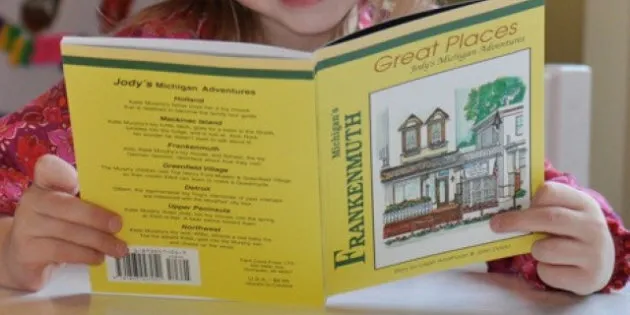
Summer. Vacation. "No more pencils, no more books ..." -- hold it right there! There may be a two-month vacation from the formal classroom, but the enjoyment of reading can, and should, be year-round. In fact, summertime is when parents and children can discover together that reading is part of recreation as well as learning.
Encouraging children to read at home is critical to them developing both into strong readers and succeeding at school. Remember, you are sending an important message to your child that reading is both a pleasure and a necessity.
Here are some suggestions to help you read at home with your child:
Let your child choose the books. Don't worry about over exposure to one genre. Rest assured that in school, teachers expose students to much variety. At home, success in reading will be determined by children's desire and excitement to explore what fascinates them and not by what is imposed -- especially by parents! Keep in mind that you are not just teaching your child how to read, but you are encouraging your child to want to read.
Talk about the book to ensure that your child understands the content and to encourage self-expression. Before reading, discuss the book cover, the title, and the author if it is someone with whom you and your child are familiar. Tired of a book they beg you to read every night? Don't worry, as children love to hear their favourites, and the repetition reinforces learning. I can recite Dr. Seuss's ABC by heart and while it delights my child every time, I know she is learning the alphabet.
During reading, make predictions about the storyline. After reading, compare the book to others your child has enjoyed (teachers call this "text-to-text connections".) Encourage your child to make connections between the book, relevant personal experiences ("text-to-self") and general knowledge ("text-to-world"). This makes reading an active and meaningful experience.
Read TO your child. Aside from the pure enjoyment of hearing stories, you are exposing your child to language, and by exploring the content of those books you are furthering the development of critical skills in comprehension. Engaging in the wonderful world of words incorporates listening, discussing, debating, exploring, imagining, questioning and ultimately writing.
Read WITH your child. Older children may prefer to read independently, or they may choose to read aloud to you. Perhaps you may have the pleasure of sharing the book and reading together. The parental support provided when reading together can also allow a child the opportunity to be challenged with a more difficult text than he or she would otherwise be able to read alone.
Accept that mistakes may occur when your child reads aloud. Try not to make constant corrections that could interrupt the flow, as well as hamper enjoyment. But by all means, correct errors that have an impact upon meaning. If there are many mistakes, then gently stop reading and discuss the book. Check for comprehension before you continue reading.
Read to your child daily. Whether it is a bedtime ritual, or under a shady tree in the backyard, set aside time to read every day. In Guiding the Reading Process, noted educator David Booth of the Ontario Institute for Studies in Education at the University of Toronto recommends at least 15 minutes per day for primary children (kindergarten to the grade three) and 30 minutes daily for junior students (grades four to six), much of which may be done independently. However, if your child appears tired or becomes disinterested, simply stop. Enjoyment is key to a successful home reading program.
You are an important influence on your child's success in reading and his or her attitude toward learning. When you make reading at home a priority, you can inspire a life-long interest in books. And memories of summer will include picking up a book as a well as picking up a ball.